
MENU
Not sure which boots to pick for Irish pitches?
Start with our Ultimate Buying Guide for Kids' Football Boots written following Frequently Asked Questions or browse the pros' choices below.
The "Rule of Thumb":
Finding the perfect fit for a junior player is a balance between performance and growth. Ideally, you should leave about a thumb’s width (approx. 1cm) of space between the child’s longest toe and the front of the boot.
This allows for natural foot expansion during high-speed sprints and provides a small, safe amount of "growth room."
The Midfoot Check: While the length is important, the width is where most parents struggle.
The boot should contour to the natural shape of the foot—snug but never painful.
The Red Flag: If you see the material bulging at the sides or if your child feels a "squeeze" in the midfoot (a very common issue with Nike Mercurials), the boot is too narrow.
The Stability Test: If the heel slips or the foot slides inside, the boot is too big, which leads to blisters and ankle instability.
Expert Tip: A proper fit allows the toes to splay slightly for better balance.
This is exactly why, for "Speed" models like the Adidas F50, we often recommend going half a size up.
It gives that crucial extra width for wider feet while maintaining the lockdown needed for top-tier play.
While you can technically wear Firm Ground (FG) boots on AstroTurf, it is not recommended.
FG studs are designed to dig into grass; on hard artificial surfaces, they don't penetrate, leading to "stud pressure" on the joints and an increased risk of knee or ankle injuries
For 3G or 4G pitches in Ireland, it is much safer to use AG (Artificial Grass) or MG (Multi-Ground) boots, which have shorter, more numerous studs for better weight distribution.
To avoid blisters and ensure a perfect game-day fit, never take new boots straight to a match. Instead, use these three proven methods:
The Thick Sock Method (Safest for all boots):
Have your child wear their new boots around the house with two pairs of thick socks for 15-20 minutes a day.
This gently stretches the material without risking damage, ensuring they are ready for their first training session.
The Hairdryer Trick (Best for Synthetics like F50):
If there’s a specific "hot spot" or tight area on a synthetic boot, use a hairdryer on a medium heat setting for 1-2 minutes to warm the material (keep the dryer at a safe distance!).
Once the material is warm and flexible, have your child wear the boots while they cool down to shape them to their foot.
The Professional's Secret" (Use with Caution): The Warm Water Method:
If you have high-quality leather boots (like the Adidas Copa) that feel a bit too tight, some pros use the "warm water method
They briefly dip the boots in warm water and then have the child wear them until they are almost dry to force the leather to mold perfectly to their unique foot shape.
Junior Striker Warning:
Water can strip natural oils from leather, making it stiff and prone to cracking over time.
If you use this method, you must apply a leather conditioner or "dubbin" once the boots are dry to keep the material supple
Never use the warm water method on synthetic boots like the F50 League; it won't stretch them and might only damage the adhesives (glues).
No, you should never put football boots in a washing machine.
The high temperatures and spinning cycle can break down the adhesives (glues) that hold the soleplate to the upper, and it can cause synthetic materials to crack or leather to shrink.
To clean them, simply use a soft brush and lukewarm soapy water, then let them air dry naturally away from direct heat sources like radiators.
Yes, but not in the way most people think.
While boots won't give a child "superpowers," the right pair provides essential safety and confidence.
Correct soleplates prevent slipping on wet Irish pitches, while lightweight "speed" models like the Adidas F50 or Nike Mercurial help with agility.
More importantly, wearing the same style as their idols like Messi or Mbappé provides a significant psychological boost and "feel-good" factor on the pitch.
As we say at Junior Striker: The best boots are the ones you forget you’re wearing.
The primary purpose of studs is traction and stability.
Football is a game of rapid accelerations, sudden stops, and sharp turns.
On natural grass, a flat sole would slide like a tire on ice.
Studs (or cleats) penetrate the surface, "locking" the player to the ground so they can push off with maximum force without slipping.
For junior players, having the right stud configuration is essential for preventing "clumsy" falls and building confidence in their movement.
It depends on the material.
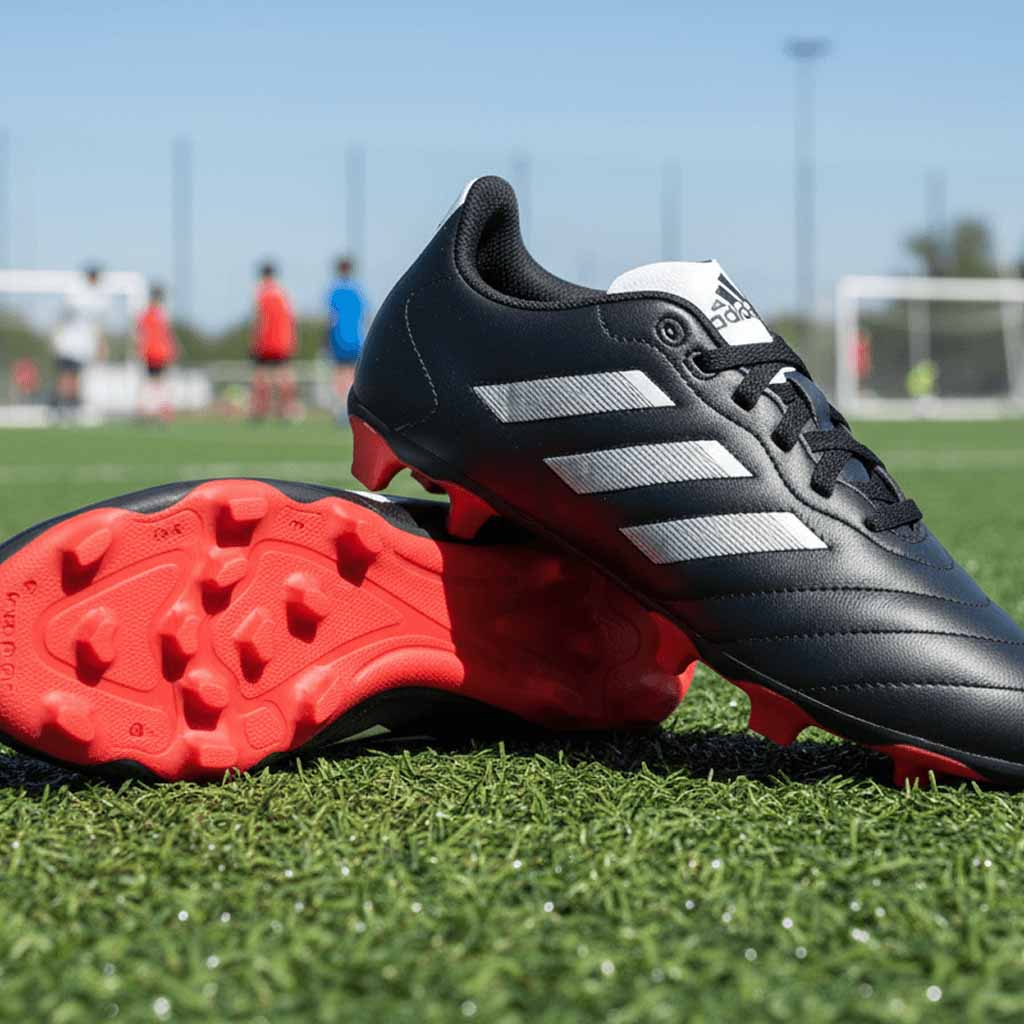
Leather boots (like the classic Adidas Copa Mundial) are natural and will stretch significantly, molding to the shape of the foot after a few sessions.
Synthetic boots, however, are designed to retain their shape and will only stretch a tiny amount, if at all
When buying synthetic boots for a child, ensure they fit perfectly from day one, as you cannot rely on them "breaking in" to become wider.
Most standard Firm Ground (FG) boots have between 10 and 14 studs, strategically placed to distribute weight and provide grip.
Soft Ground (SG) boots for muddy pitches usually have fewer (6 to 8) but longer metal studs to prevent mud from getting stuck
On the other hand, Astro Turf (TF) or Multi-Ground (MG) boots can have over 20 short rubber studs to provide stability on harder, artificial surfaces without causing joint pain.
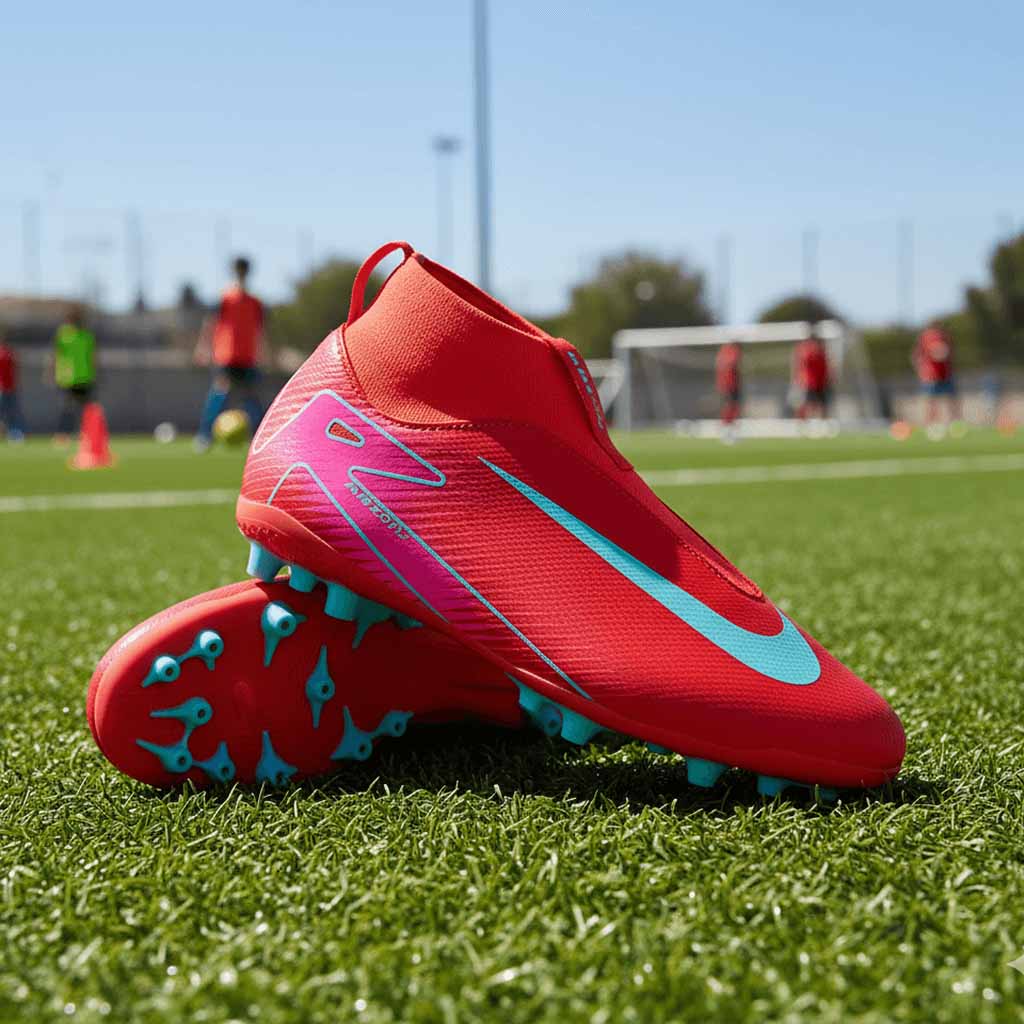
The Speedster (Nike Mercurial / Adidas F50):
If you wear these, you're all about explosive pace and finishing.
Like Kylian Mbappé or Lamine Yamal, you want the lightest tech to leave defenders in the dust.
You’re the one the other team is afraid of in a footrace.
The Controller (Adidas Predator / Nike Phantom)
You value precision and touch.
You’re the playmaker who dictates the game, much like the legendary stars who dominated the midfield
Your boots are your tools for that perfect cross or top-corner strike.
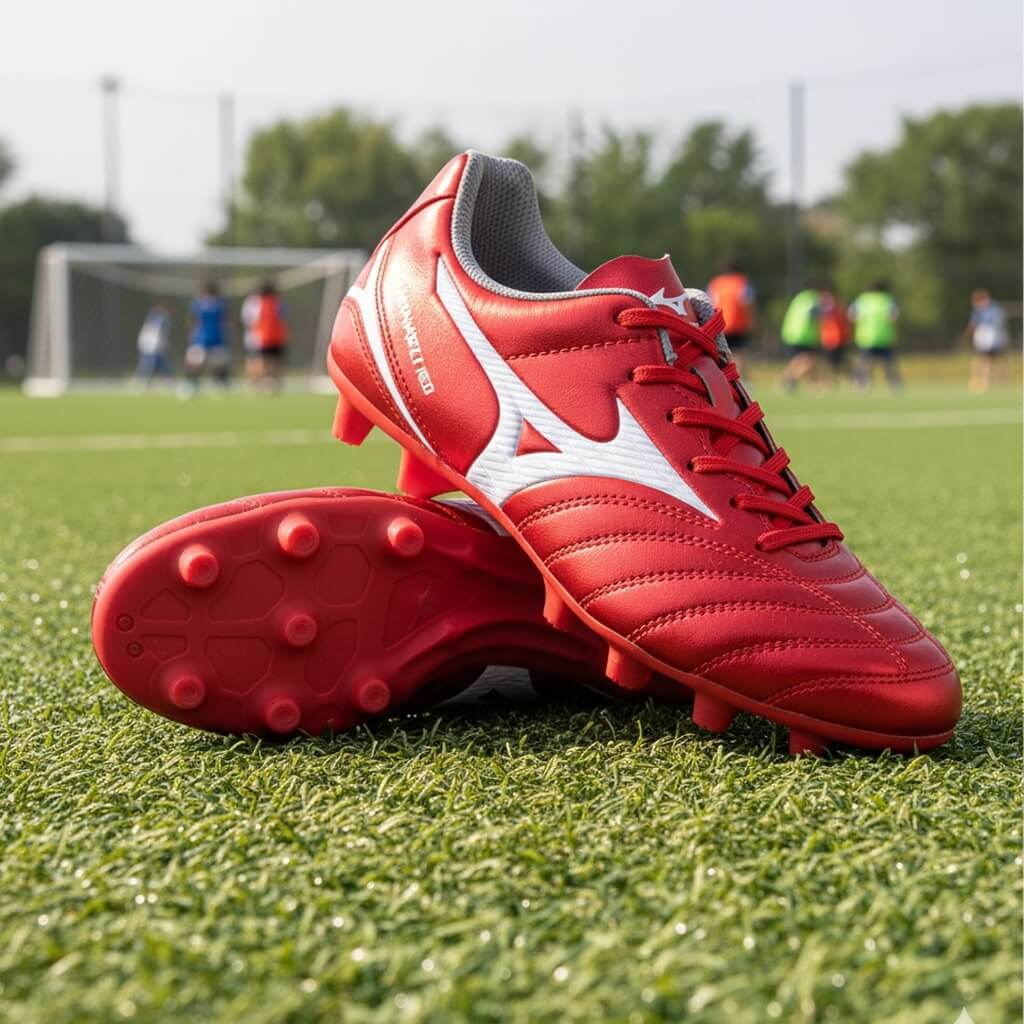
The "Old School" Reliable (Leather Boots / Copa):
You prioritize comfort and a classic touch.
You're a hard worker, reliable, and you want a boot that lasts. You’re the engine room of the team.
Firm Ground (FG) boots are the most popular type of football footwear, designed specifically for use on natural grass pitches that are dry or slightly damp.
Key Features:
- Stud Design: They feature fixed (non-removable) studs made of TPU (hard plastic) or rubber.
- Shape: The studs are usually "bladed" (long and thin) or conical (round) to provide maximum grip and acceleration on soil.
- Traction: They are designed to "bite" into the ground just enough to give stability without getting stuck.
The "Irish Parent" Warning (Safety First):
While FG boots are versatile, they are not designed for 3G or 4G AstroTurf.
Because FG studs are longer and designed for soil, they won't penetrate artificial surfaces.
This creates "stud pressure," which can lead to:
- Ankle/Knee Injuries: The boot can "stick" too hard in the turf during a turn.
- Discomfort: Your child will feel like they are walking on pebbles.
- Durability issues: The friction of artificial turf can melt the plastic studs or cause the soleplate to peel away from the upper.
Soft Ground (SG) boots are specifically engineered for wet, muddy, and waterlogged natural grass pitches.
In the Irish climate, these are often essential from November through March, when standard pitches become soft and slippery.
Key Features:
- Metal Studs: Unlike FG boots, SG models usually feature longer, replaceable metal-tipped studs.
- The "6-Stud" Classic: Traditional SG boots often have 6 prominent studs (4 at the front, 2 at the back) designed to penetrate deep into the mud to find grip.
- Anti-Clog Tech: Many modern SG boots (like Nike’s Anti-Clog range) have special coatings on the soleplate to prevent mud from sticking, keeping the boots light even in heavy conditions.
Essential Safety Advice for Parents:
- Strictly for Grass: Never allow your child to wear SG boots on AstroTurf or hard ground. The metal studs provide no grip on hard surfaces and can cause serious slips or "impact" injuries to the heels and shins.
- Maintenance: Because the studs are metal and replaceable, they can loosen over time. Always check that they are screwed in tight before a match to prevent losing a stud mid-game.
- Pitch Regulations: Some junior leagues or specific Astro-facilities in Ireland ban metal studs entirely for safety reasons. Always check with your club before investing in a pure SG model.
If you don't want to buy two pairs of boots, look for Hybrid SG/FG models usually marked as MG boots.
They combine fixed plastic studs with a few metal ones, offering decent grip in the mud without being too aggressive for slightly firmer grass.
Artificial Grass (AG) boots are specifically designed for use on modern 3G, 4G, and 5G synthetic pitches.
Unlike old-school AstroTurf, these modern pitches have long synthetic grass blades and are filled with black rubber crumbs to mimic real soil.
Key Features:
- Conical, Hollow Studs: AG boots usually have many short, circular (conical) studs. They are often hollow in the middle to absorb impact and provide "give" when turning.
- Even Weight Distribution: Because there are more studs on an AG soleplate than on an FG one, your child’s weight is spread more evenly. This prevents "stud pressure" and foot soreness.
- Heat Resistance: Artificial pitches get much hotter than natural grass. AG soleplates are made from materials that can withstand the friction and heat of synthetic turf without the glue melting.
Why AG is a "Must-Have" for Safety:
In Ireland, many junior clubs now play on all-weather pitches.
Using standard Firm Ground (FG) boots on these surfaces is a major risk.
Because FG studs are too long and "aggressive," they can get stuck in the turf while the player's body keeps turning, leading to serious knee (ACL) and ankle injurieс
Because FG studs are too long and "aggressive," they can get stuck in the turf while the player's body keeps turning, leading to serious knee (ACL) and ankle injurieс
AG boots are designed to release from the turf safely during quick pivots.
Weight is a trade-off between speed and protection.
Elite Speed: Under 200g (The "F50" zone). Perfect for wingers and strikers who rely on acceleration.
Balanced Performance: 200g – 250g. Great for midfielders who need a bit more "meat" for passing and protection.
For a junior player, lightweight is king. Every gram saved reduces fatigue over a 60-minute match, allowing them to stay sharper in the final minutes.
Don't get blinded by marketing jargon. You only need three things:
- The Right Soleplate (MG/FG/AG): If you play on Irish 4G pitches, you need an MG (Multi-Ground) plate to prevent injury and stud pressure.
- Lockdown (The Collar): A "Mid-cut" collar provides sensory feedback and keeps the heel locked in.
- Touch Texture: Look for a "grip" skin (like Adidas Sprintgrid) that helps the ball stay close during high-speed dribbling.
This is the industry's way of categorizing price and tech levels:
- P1 (Elite): The most expensive, thinnest materials, used by pros. (e.g., F50 Elite).
- P2 (Pro/League):The "Sweet Spot". High-end tech but built with more durable materials. Better value for money for growing feet.
- P3 (Club/Entry): Basic materials, heavier, but very durable and budget-friendly.
If you are looking for that "weightless" feeling on the pitch, you are likely choosing between the big three of speed: Puma, Nike, and Adidas.
While the Nike Mercurial Vapor has long been the gold standard for speed, the competition in 2026 is closer than ever.
Currently, the Puma Ultra holds the title for the technically lightest boot on the market, weighing in at a feather-light 170g – 180g.
However, many pros—and our junior strikers—still prefer the Nike Mercurial (approx. 185g) because it combines a lightweight feel with the unique snap of the Air Zoom unit.
The return of the Adidas F50 Elite has also shaken things up, matching the Nike in weight while focusing on a sleek, aerodynamic "barefoot" touch.
For Junior Players: While every gram counts for the pros, for kids, it’s all about the "locked-in" feel
The Adidas F50 League and Nike Jr. Mercurial Academy versions are incredibly impressive
They offer a high-speed silhouette that is significantly lighter than traditional leather or control boots, giving young players the confidence to sprint and pivot without being weighed down.









.jpg)
.jpg)
.jpg)

%20.3%20%E2%80%93%20Kids%20(FGMG).jpg)
.jpg)
.jpg)
.jpg)

.jpg)