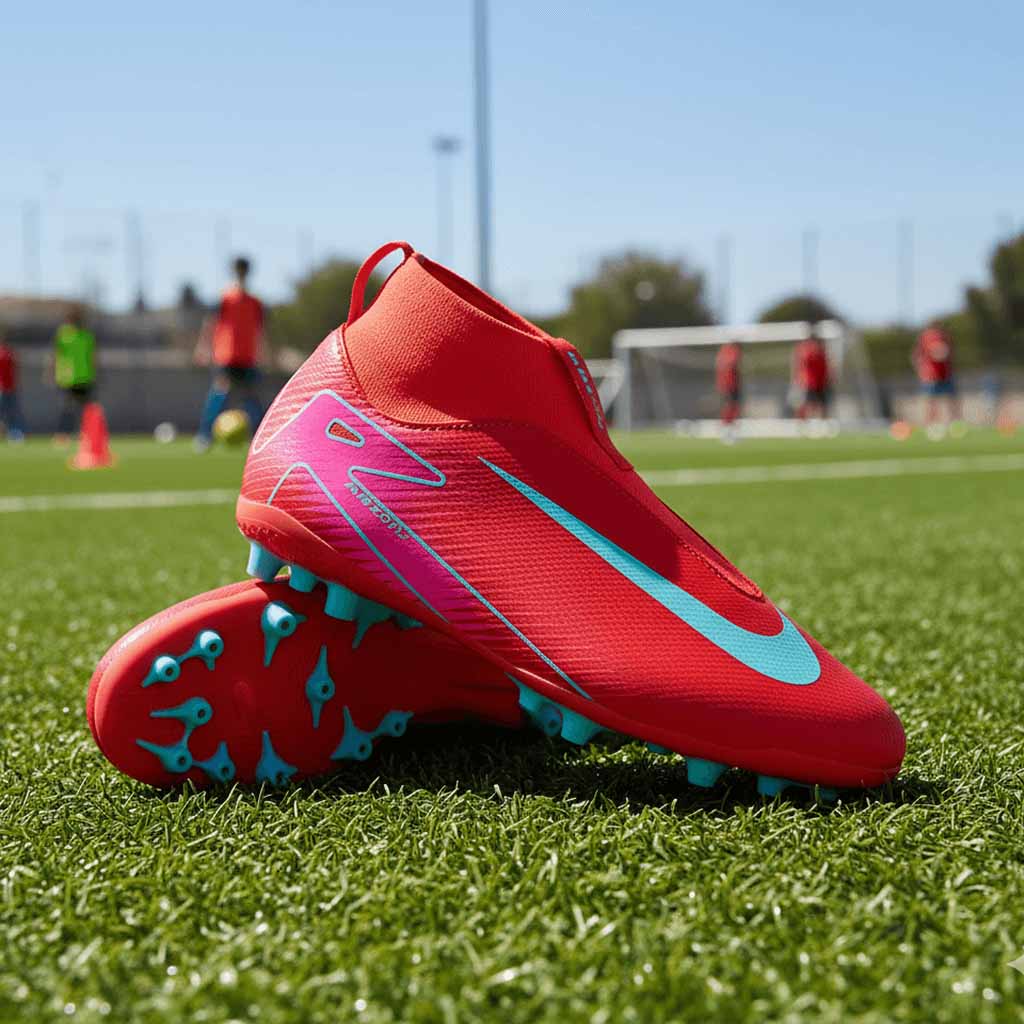
What to Look for in Football Shoes for Boys’?
- Comfort & Fit – growing feet need flexibility and soft uppers
- Support – reinforced collars or insoles help stability
- Durability – synthetic uppers last longer for kids playing multiple times per week
Tables: Top picks rated by key performance metrics. Grade A = Excellent, B = Good, C = Average.
Bestselling Boys Football Shoes in Ireland
Top Boys Footwear Models (Ireland 2026)
Top Firm Ground (FG) Boots – Little Stars (Ages 4–7)
Top Firm Ground (FG) Boots – Junior Heroes (Ages 8–13)
Top Turf (TF) Boots – Little Stars (Ages 4–7)
Top Turf (TF) Boots – Junior Heroes (Ages 8–13)
Note: Prices and availability are subject to change. It's advisable to check the retailer's website for the most current information.
Affordable Boys Football Footwear
Budget-friendly doesn’t mean low quality. Some excellent value choices include:
- Precision Matrix Junior FG Football Boots: Lightweight and durable, suitable for young players.
- Kipsta Kids' Lace-Up Football Boots 160 Turf: Great for beginners, offering comfort and grip on turf surfaces.
Age & Stage: Boots for Every Young Player
- Little Stars (Toddlers & Preschoolers): For those first joyful kicks around the garden or in casual training, comfort and ease of wear are paramount. Look for flexible, soft boots that are easy to get on and off, prioritising protection for their developing feet.
- Junior Heroes (School-Aged Children): As they get more serious about the game, boots for this age group need to strike a balance between enhancing performance and offering durability. Focus on support for active, growing feet and reliable grip for dynamic play.
Selecting the Right Ground Football Boots for Boys
Choosing between different ground football boots depends on where your son trains and plays.
For natural grass, you should specifically look for firm ground football models (often labeled as boots firm ground).
These provide stability on standard pitches.
However, for those playing on older sand-based pitches, turf football boots or specialized astro turf football shoes are essential to prevent joint strain.
If your son participates in school league matches in a gym, don't forget that traditional running shoes won't work; indoor football boots with flat rubber soles are required to protect the court and provide grip.
Pitch Perfect: Matching Boots to the Playing Surface
Selecting the right studs on a new pair of boots is crucial for traction and injury prevention:
- Firm Ground (FG) - for natural grass (dry to moderately soft). The Irish all-rounder.
- Tip: In wet, muddy winter months, switch to Soft Ground (SG) with metal studs for safer grip.
- Artificial Ground (AG) - Specifically designed for modern 3G/4G pitches. Rounded studs give grip and reduce injury risk.
- Turf (TF) - Best for old-style sand-based Astro or hard courts. Small rubber nubs protect joints and the surface.
- Indoor (IN): For the Futsal & Sports Hall Stars—non-marking soles that provide grip on gym floors without damaging the wood.
Comparing Popular Models: Nike Mercurial, Nike Phantom Low, and Adidas Copa Pure
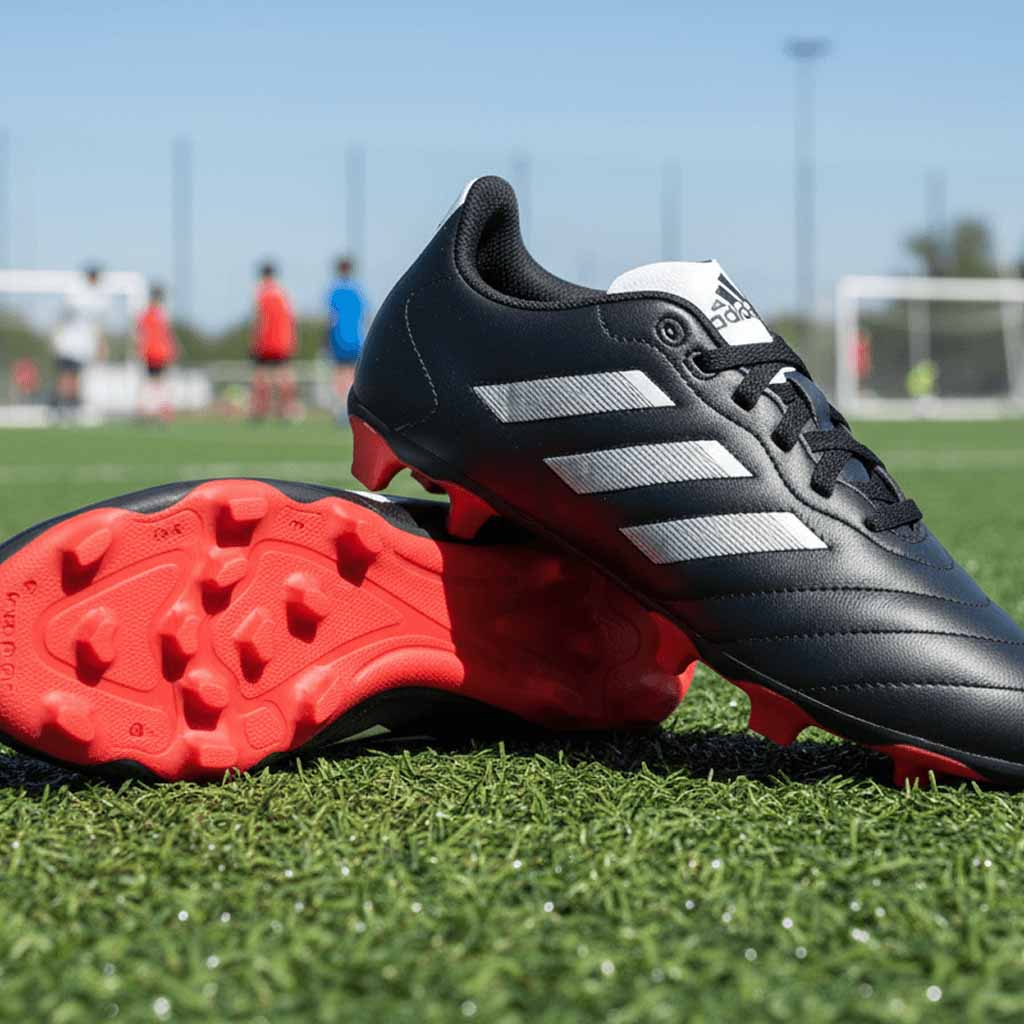
While the Mercurial range is built for speed, the adidas copa pure is the go-to choice for boys who prefer a classic leather feel and a natural touch on the ball.
If you are looking at the nike phantom low range, you’ll find a boot designed for precision and control.
Unlike the flexible, cushioned midsole you find in traditional running footwear, comparing different adidas football boots alongside Nike's offerings helps you understand which brand's rigid football mold fits your child's foot shape better.
Smart Budgeting: Finding the Best Value for Your Money
When browsing a major Irish sports shop like Elverys or Sports Direct, parents often filter by the lowest price to find budget options.
However, it's worth checking the price high low results as well; sometimes, a slightly high price tag on an 'Academy' level boot means it includes better 'Gripknit' or 'Fuzionfit' technology that significantly improves the boot's lifespan.
Navigating this low high price spectrum at your local shop or online retailer is the best way to ensure you're getting professional-grade quality without overpaying.
Mastering the Fit: Size Size Size and Proper Sizing
Finding the correct size size size is the most frequent challenge for parents.
Because boys' feet grow rapidly, a "one size fits all" approach doesn't work for the football shoes kids use today.
I recommend checking sizing chart to compare the price low high options across different brands, as even a premium boot in the wrong size is a safety risk.
If your son is between sizes, always test the fit while they are wearing their thick match-day socks, and prioritize a snug heel lock and proper toe space to ensure your investment in football boots kids equipment lasts the whole season.
This is especially true for ground soft ground (SG) models where stability is key on muddy pitches.
Important Considerations for Every Parent
- Playing Position: While specific boots for goalkeepers, defenders, midfielders, and strikers exist, for most kids, a good all-rounder (like an FG boot) is perfectly fine. More specialised boots become relevant as they get older and their position becomes more defined.
- Foot Shape:
- Wide Feet: Some brands or specific models offer a wider fit. Leather boots can also mould nicely to wider feet. Unisex Sizing: Parents often wonder if boots for boys differ from versions built for girls, but in junior sizes, the blanks and structural molds are identical.A girls soccer athlete will get the exact same fit, depth, and support from these models, which often scale right up into adult mens and womens football sizing templates.
- Flat Feet / Orthotics: Look for boots with removable insoles so custom orthotics can be easily inserted for better support.
- Player Style:
- Boots for Speed: Compared to the bulky foam soles of standard running shoes, these ultra-lightweight, sleek black boots feature razor-thin uppers and aggressive stud patterns built for explosive acceleration.
- Boots for Control / Shooting / Passing: Often have textured uppers or larger strike zones for enhanced ball feel and precision.
Maintenance Tips & Accessories
- Cleaning: Remove dirt after each use with a soft brush.
- Drying: Air dry naturally; avoid direct heat sources.
- Storage: Keep boots in a cool, dry place to maintain their shape and longevity, and avoid leaving them trapped in damp sports bags overnight.
FAQ
What size football boots should I buy for my son?
When selecting the correct size for boys football footwear, the most reliable method is to measure your child's foot in centimeters rather than relying on standard UK or EU sizes, as molds between brands like Nike, Adidas, and New Balance vary significantly, even when stepping up into adult mens sizes.
You should aim for a 'snug but comfortable' fit; generally, leaving a thumb’s width (approximately 1cm) of space between the longest toe and the front of the boot allows for natural growth and the thickness of proper football socks.
Avoid buying boots more than one size up to 'gain more time,' as an oversized boot causes heel slippage and painful blisters, compromising your son's stability during matches
Do boys need different boots for natural grass and artificial pitches?
Yes, using the correct ground football boots is essential because natural grass and artificial turf (3G/4G) react differently to pressure and movement.
For natural grass, firm ground football boots (FG) with fewer, longer studs provide the necessary 'bite.' However, using FG boots—especially those with bladed studs—on artificial turf is a major safety risk, as they can 'snag' or lock into the synthetic fibers, leading to knee and ankle strain.
For modern artificial pitches, you should choose artificial grass boots (AG) or versatile multi ground football boots (MG).
These feature shorter, rounded studs that release more easily from the turf, preventing 'foot-lock' and reducing the abrasive wear that artificial surfaces cause to standard kids football boots.
What are the best value football shoes for boys?
The best value football boots for boys are typically found in the 'Academy' (Nike), 'League' (Adidas), or 'Match' (Puma) price tiers.
These mid-range kids football boots are specifically engineered to offer a high-performance feel and the same aesthetic as professional 'Elite' models, but they use more durable, robust materials that actually last longer on high-wear surfaces like 3G turf.
While pro-level boots are lighter, they are often too fragile for a full season of youth football. For a curated list of top-rated, durable options that balance performance and budget, see our detailed review of the best football boots under €100.
How often should I replace my child’s football boots?
Generally, you should expect to replace kids football boots every 6 to 10 months, or roughly twice a season.
This is driven by two main factors: physical growth and technical wear.
Since children’s feet can often grow half a size within a single school term, a monthly 'toe-space' check is essential.
Beyond sizing, you must replace the boots immediately if you notice sole separation (where the upper pulls away from the plate) or if the studs have worn down significantly.
Worn studs on any ground football boots drastically reduce traction and increase the risk of injury on both wet grass and artificial turf.
For maximum durability in the Irish climate, alternating between a match-day pair and versatile multi ground football boots (MG) for training is the most cost-effective way to extend the lifespan of your investment.
Can younger boys use laceless football boots?
Younger boys can use laceless football boots, but the fit must be absolutely perfect for them to be effective and safe. Unlike traditional laced models, laceless football boots rely entirely on the compression of the upper material to provide lockdown.
If the boot is even slightly too large—a common mistake when parents 'size up' for growth—the foot will slide inside, causing instability and blisters.
For younger players with narrower feet or those who require a highly customizable fit, we recommend staying with laced kids football boots to ensure the ankle and midfoot are properly supported during high-speed turns and tackles.
Can boys wear football boots without studs?
Boys football shoes without studs are specifically designed for hard surfaces where traditional stud penetration is impossible.
These are generally divided into two categories:
- Indoor football shoes and turf football boots (TF). Indoor football shoes feature a flat, non-marking rubber sole providing maximum grip on wooden school halls or polished courts.
- On the other hand, turf football boots use dozens of small rubber 'nubs' instead of studs to provide traction on shallow astro-carpet or concrete playgrounds. Using these 'studless' options is the best way to prevent joint pain and 'stud pressure' when your child is not playing on natural grass or deep 3G/4G pitches.
FINAL THOUGHTS
Selecting the right football boots for your child enhances their performance and enjoyment of the game.
Consider their playing surface, foot size, and personal preferences.
Whether you're looking for cheap boys football footwear, boys Messi football boots, or specific styles like boys leather football boots, the Irish market offers a variety of options to meet your needs.


.jpg)
.jpg)