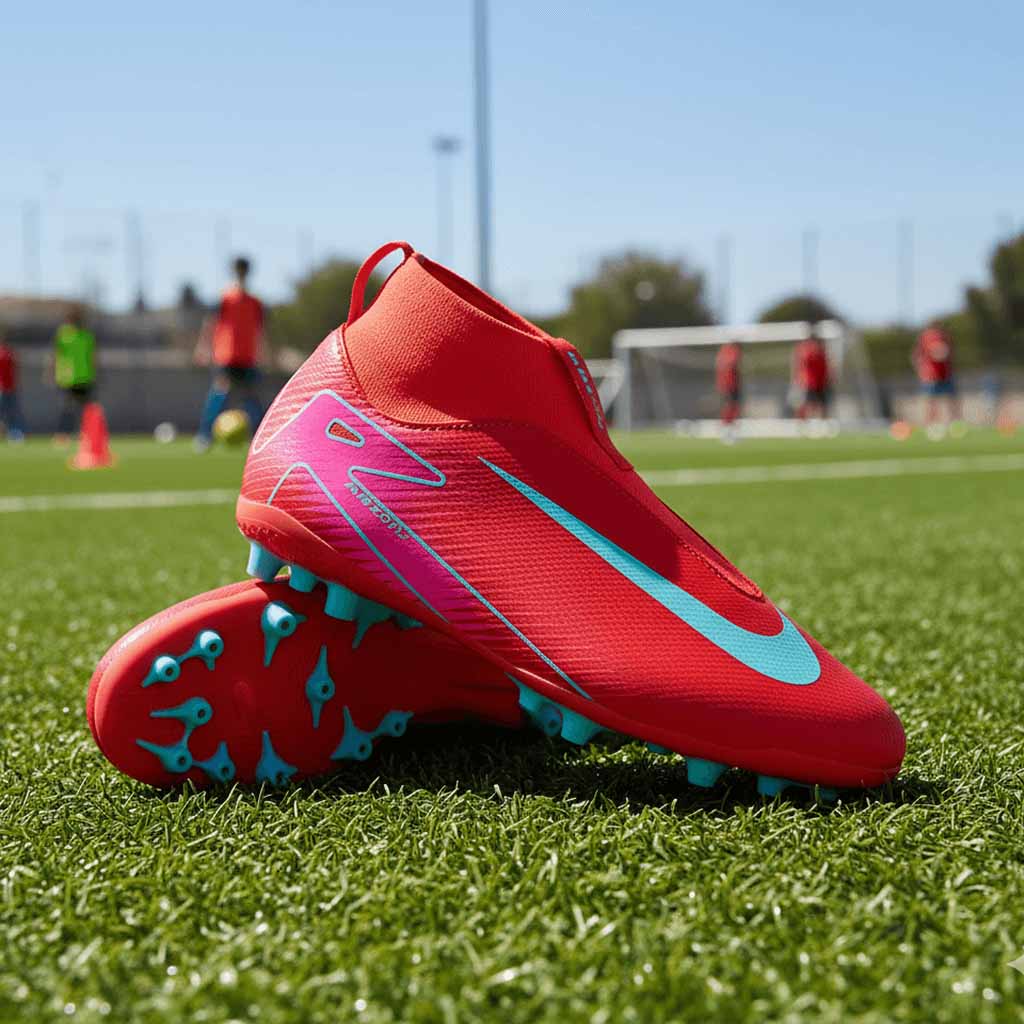
What to look for leather football boots?
- Pressure Management (Stud Pressure Relief)
Comfort & Fit:
Leather moulds to the foot, reducing pressure and improving long-session comfort.
Touch & Ball Feel:
Natural or engineered leather gives the best ball contact, softness, and control.
Pressure Management (Stud Pressure Relief):
Leather and softer plates absorb stud pressure better, improving comfort on firm grass and reducing soreness.
In the table below, each boot is rated based on Comfort, Touch and Pressure Relief
Top 10 Kids’ Leather Football Boots In Ireland
*Prices may vary. Leather availability in junior sizes depends on stock and season.
Note: Prices and availability are subject to change. Please check the retailer's website for the most current information.
Here’s a quick side‑by‑side to help parents pick the right upper for comfort, touch and Irish weather.
Leather vs. Synthetic
Table: Leather vs Engineered‑Leather vs Synthetic — comfort, touch, break‑in, durability and surface notes for kids’ boots.
Make your choise
If your child values plush comfort and a natural first touch, start with leather or engineered‑leather lines (Copa, Tiempo/King‑style).
For mixed grass + 3G/4G schedules and low‑maintenance care, engineered‑leather or modern synthetics on an MG/FG‑AG plate are brilliant “grab‑and‑go” options.
Speed‑focused kids who like a lighter, “snappier” feel often prefer synthetic uppers, while wider feet typically find leather vamps more forgiving.
Fit comes first—choose the pair that locks the heel and midfoot snugly with a little toe room.
Pick leather boots for your child
- Fit first (snug, not sloppy): Leather/engineered leather should hug the heel & midfoot with a little toe room. Don’t oversize “to grow into” — it causes heel lift and blisters.
- Leather stretches (a little): True leather vamps will soften and mould after a few sessions. Start comfortably snug; avoid painful tightness.
- Weather & care: Wipe mud after play, air‑dry away from heat, stuff with paper. Use a mild leather balm (real‑leather vamps) to keep supple.
- Surface match: Mostly grass → FG. Mix of grass + 3G/4G → MG/FG‑AG. Hard Astro/school courts → TF (leather forefoot options exist).
- Foot shape: Wider feet often love leather vamps (Copa, 442) or adaptive wraps (King). Narrow heels → look for secure heel counters and heel‑lock lacing.
Stud/surface guide
Which sole works best in Ireland?
- FG (Firm Ground): Moulded studs for dry/moderately soft grass; classic conicals feel smooth and comfy.
- TF (Turf): Rubber nubs for hard Astro/school courts; trainer‑like comfort.
(Avoid metal SG on astro; check your club’s rules for SG on grass.)
FAQ
Are leather boots better for kids than synthetics?
Leather (and modern leather‑alternatives) often feel softer with a natural touch, and can mould to growing feet. Synthetics can be lighter and lower‑maintenance. Pick what fits best for your child.
Do current Tiempo/Copa still use real leather?
It depends on the model/tier. Some kids’ Copas have a leather forefoot, while current Tiempo lines use engineered non‑animal leather with a very soft feel. Always check the product details.
Will leather get heavy in the rain?
Modern leathers are treated and many kids’ models blend synthetics to limit water uptake. Still, wipe clean and air‑dry after wet sessions.
Are leather boots good for wide feet?
Often yes. Leather vamps (Copa, NB 442) and adaptive “leather‑feel” uppers (King) tend to accommodate width better than thin speed synthetics.
Can we use leather boots on 3G/4G?
Yes — choose AG/MG (or FG/AG) stud layouts for regular turf use. Avoid long FG blades on deep 3G; they can feel harsh and wear faster.


.jpg)
.jpg)