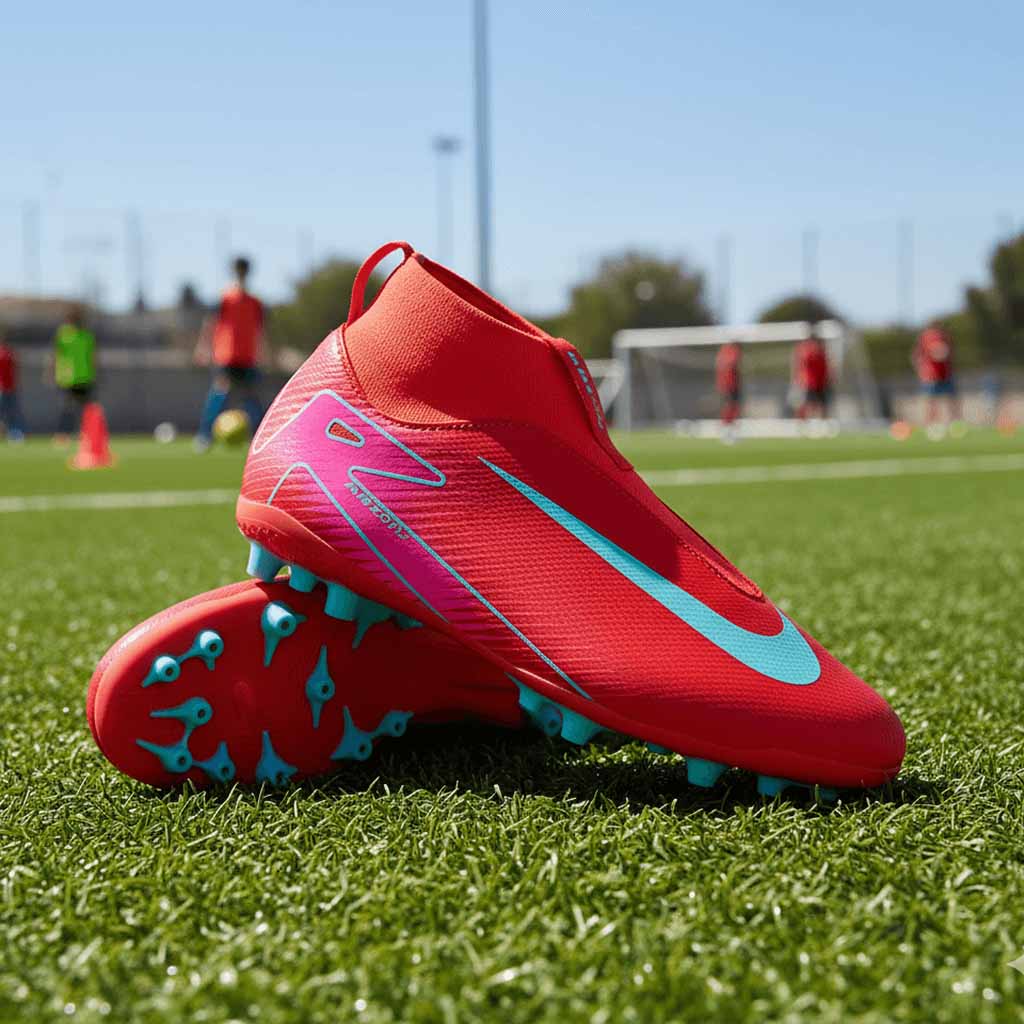
Main Parts of Soccer Boots
Table: Main parts of a football boot for kids — what they do, common materials, how they affect fit/comfort, and quick care tips.
| Part | What it does | Materials / Tech | Fit & Feel Impact | Care Tips |
|---|---|---|---|---|
| Upper (overall shell) | Wraps the foot; shapes touch, comfort, and lockdown. | Leather, engineered “leather”, microfiber synthetics, knitted meshes, TPU overlays. | Leather/engineered leather feel softer; synthetics/knits can be lighter or firmer. | Wipe after play; air‑dry away from heat; occasional balm for real leather. |
| Vamp / Strike zone | Main contact area for passing/shooting; influences ball feel. | Textured prints, rubber/TPU “control zones”, quilted leather. | More texture can add grip; thinner vamps feel “snappier”. | Keep clean for consistent grip; avoid harsh scrubbing on prints. |
| Toe box / Bumper | Protects toes; adds shape at the front. | Reinforced synthetic/TPU coating, stitched leather. | Too shallow = cramped; too tall = sloppy feel. | Check scuffs; avoid dragging toes on hard ground. |
| Midfoot cage / Panels | Add structure and side‑to‑side support. | Internal straps, external cages, lateral TPU ribs. | Improves lockdown for cuts; can feel tight on wider feet. | Inspect seams; if rubbing, try different socks or model. |
| Closure (laces / laceless / straps) | Secures the boot on the foot. | Classic laces, hidden “ghost” laces, laceless knit, Velcro/FlyEase. | Laces = adjustable; laceless = easy on/off but must fit snug. | Re‑tie/check before play; keep Velcro lint‑free. |
| Tongue / Lace cover | Comfort under laces; smooths strike area. | Padded tongues, elastic lace‑covers, integrated knit flaps. | Reduces lace pressure; cleaner contact on the ball. | Air‑dry; avoid over‑stretching elastic covers. |
| Collar (low / mid) | Wraps the ankle; can add comfort/support. | Elastic knit collars, padded low‑cuts. | Mid collars feel snug; low cuts feel freer and easier to put on. | Stretch gently when donning; don’t yank on thin knit. |
| Heel counter | Stabilises heel; prevents “roll” and slippage. | Internal plastic counter, external heel frame. | Firm counters add security; poor fit causes heel rub. | Test for heel lift; use proper socks; stop if blisters form. |
| Insole / Sockliner | Cushioning underfoot; can fine‑tune fit. | EVA foam, Ortholite; sometimes removable for orthotics. | More padding = comfort; removable insoles help with inserts. | Air‑out after play; replace if flattened or smelly. |
| Midsole (if present) | Extra cushioning layer (common in TF/indoor). | EVA/foam compounds. | Softer feel on hard courts; less common in FG/AG plates. | Don’t bake on radiators; foam can deform. |
| Outsole / Plate | Distributes force; anchors studs or rubber tread. | TPU/nylon/carbon blends; flex grooves. | Stiffer plates feel springy; flexible plates feel natural. | Rinse mud; check for cracks at flex points. |
| Studs / Tread | Provide traction specific to the surface. | FG/MG/AG molded studs; TF rubber nubs; SG metal screws. | Match studs to pitch for grip & safety. | Brush clean; replace SG screws when worn. |
| Last / Shape | Defines width/volume; overall fit profile. | Brand‑specific foot shape (narrow/regular/roomy). | Wider lasts suit broad feet; snug lasts hug narrow feet. | Try with match socks; don’t oversize to “grow into”. |
*Terminology varies by brand/tier, but these core parts appear in most kids’ boots.
.jpg)
.jpg)