For AG pitches, kids (and adult) need football boots with AG or MG (Multi-Ground) soles, featuring shorter, high-density stud patterns to reduce injury risks and provide comfort on firm surfaces.
Key choices include the Adidas Predator 24.3 AG for durability and the Nike Jr. Tiempo Legend 10 for versatility.
The best options often feature "pro" styling from models like the Nike Mercurial (Ronaldo) or Adidas F50 (Messi).
TABLE OF CONTENT
What are AG Football Shoes and Boots?
AG stands for Artificial Grass. These football shoes feature shorter, hollow studs designed specifically to provide safe traction and reduce injury risks on modern synthetic turf pitches (3G/4G)
What to look for kids’ artificial grass football boots?
Enhanced grip on artificial surfaces
Responsive cushioning for all-day comfort
Artificial pitches involve a lot of short sprints, stopping, turning, and running on a firmer surface, which places extra stress on growing feet.
Durability to endure the unique challenges of synthetic fields
Use the table below to view and compare the best AG football boots for kids based on Enhanced Grip, Responsive Cushioning and Durability.
Best Artificial Grass (AG) Football Boots for Kids in Ireland (2026)
Boot Model
Brand
Why Good on 3G/4G
Enhanced Grip
Responsive Cushioning
Durability
Price*
Where to Buy
Nike Jr. Tiempo Legend 10 Academy (MG)
Nike
MG sole with higher stud count for pressure spread; stable lockdown.
B
A
A
~€75
Nike.ie, Elverys, Lovell Soccer
Nike Jr. Mercurial Vapor 16 Academy (MG)
Nike
Light speed feel; short studs reduce harsh bite on turf.
A
B
B
~€60
Nike.ie, Lifestyle Sports
Nike Jr. Phantom GX 2 Academy (MG)
Nike
Balanced control boot; stud geometry tuned for turf grip.
A
A
B
~€70
Nike.ie, Lovell Soccer
Adidas Predator 24.3 AG (Kids)
Adidas
AG outsole with many rounded studs; safe, joint-friendly traction.
A
A
A
~€72
Adidas.ie, JD Sports
Adidas X Crazyfast .3 AG (Kids)
Adidas
Lightweight AG stud map grips without sticking into turf.
A
B
B
~€70
Adidas.ie, Sports Direct
Adidas Copa Pure II.3 AG (Kids)
Adidas
Leather forefoot; AG plate spreads load comfortably.
B
A
A
~€70
Adidas.ie, JD Sports
Puma Future 8 Match FG/AG (Kids)
Puma
Adaptive wrap upper; versatile FG/AG plate.
B
B
B
~€75
Puma.com, Sports Direct
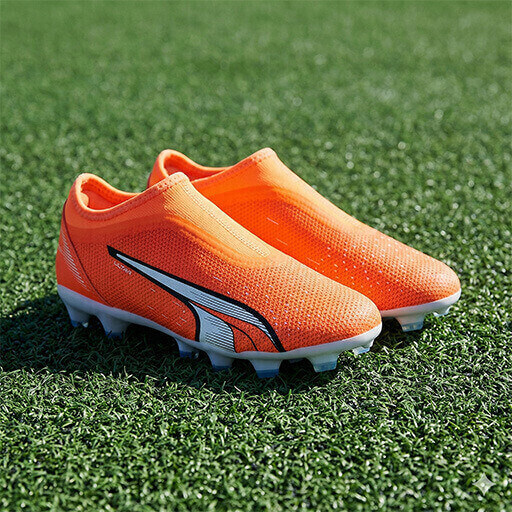
Puma Ultra Match LL Youth (FG/AG)
Puma
Laceless MG/FG layout; smooth fast feel.
B
C
B
~€55
Puma.com, Sports Direct
Kipsta Agility 500 MG (Kids)
Decathlon
Budget-friendly MG sole; solid baseline grip.
B
C
C
~€25
Decathlon.ie
Note: Prices and availability are subject to change. It's advisable to check the retailer's website for the most current information.
Which AG Boots Do The Pros Wear? (Kids' Editions)?
Kids often want to wear exactly what their heroes wear.
The good news is that the big brands make AG (Artificial Grass) or MG (Multi-Ground) versions of the exact boots worn by Messi, Ronaldo, and Neymar.
Nike,Adidas and Puma have optimized their kids' editions for the Irish climate
Here is how to find the right "Pro" boot that is safe for 3G/4G pitches.
Lionel Messi AG Football Boots for Kids
Messi wears the adidas F50 line (formerly X Crazyfast).
These are built for pure speed and agility.
The Pro Boot: adidas F50 Elite / X Crazyfast
The Kids' AG Version: Look for the adidas F50 League MG or Club MG.
Why for Kids: These boots are very lightweight, making them great for fast wingers.The specific "MG" stud pattern is triangular, offering great grip on synthetic grass without getting stuck.
Known for explosive acceleration, these are often the most popular boots on the pitch.
The Pro Boot: Nike Mercurial Superfly or Vapor Elite.
The Kids' AG Version: Nike labels their kids' artificial grass boots as MG. You want the Nike Jr. Mercurial Superfly Academy MG.
Important Note: Many parents search for "Cristiano Ronaldo astro boots." If playing on 3G/4G, buy the MG version (studs). If playing on flat, hard, sand-based courts, buy the TF (Turf) version.
Neymar Jr AG Football Boots
Neymar wears PUMA, specifically the "Future" line.
These are known for their comfort and the "Fuzionfit" band that hugs the midfoot.
The Pro Boot: PUMA Future 7 Ultimate.
The Kids' AG Version: PUMA Future 7 Match FG/AG or Puma Ultra Match Jr
Why for Kids: PUMA makes the most versatile soleplate. Their "FG/AG" mix is perfectly safe for Irish artificial grass and natural pitches alike. They are also slightly wider than Nike, making them good for comfort.
David Beckham Style (Control) Boots
While Beckham has retired, his legacy lives on in the adidas Predator.
If your child is a midfielder who loves crossing and curling the ball, this is the boot.
The Legacy: The Fold-over tongue (available on some modern versions).
The Kids' AG Version: adidas Predator 24 League MG.
Feature: These feature "Strikeskin" (rubber fins) on the toe box to help grip the ball for that classic Beckham curl.
Kids' Leather Football Boots for AG
Most modern boots are synthetic, but leather is excellent for synthetic grass because it molds to the foot and stays cool (plastic pitches can get hot).
Best Option: adidas Copa Pure II League FG/AG.
Why: It uses a cow leather forefoot for a soft touch and a flexible soleplate that handles the abrasion of artificial turf better than cheap synthetics
Runner Up: Nike Tiempo Legend 10 Academy MG.
Note: Nike recently switched to "FlyTouch" (engineered leather). It mimics leather but doesn't overstretch when wet—perfect for Irish weather.
AG/MG Football Boots vs Indoor Football boots
Feature
AG / MG Boots (Studs)
Indoor (IN / IC) Shoes (Flats)
Sole
Plastic hollow studs
Flat gum rubber (non-marking)
Best Surface
3G, 4G, long grass
Sports halls, wooden floors, concrete
Grip Style
Penetrates grass / rubber crumb
Friction grip on flat hard floors
Can use on 3G?
YES (Ideal)
NO (Dangerous / slippery)
Can use indoors?
NO (May damage floors)
YES (Ideal)
AG buying checklist
Plays on astro weekly? Pick AG or FG/AG (MG) — safer stud geometry for 3G/4G.
Comfort on turf: More (short) studs = less stud pressure, happier feet.
Grass + astro mix:FG/AG (MG) is the one‑pair solution; saves buying separate FG and AG.
Fit first: Snug heel/midfoot, small toe room; avoid oversizing “to grow into” (causes rubbing).
Care: Brush off crumb infill, air‑dry, and check stud wear each term.
Understanding Artificial Ground (AG)
"Artificial Ground" is a catch-all term for football pitches that use synthetic, man-made materials instead of real grass.
However, not all synthetic pitches are the same.
They are usually categorized by "generations" (G), which dictates what kind of boot you should use.
1. 1st & 2nd Generation (2G - Older Astro Turf)
What it is: These are the older, short-pile carpets, often referred to as "Astro Turf" (though that's a brand name). They usually have sand or rubber granules used as infill, but the surface is still very firm, almost concrete-like underneath.
The Boot Risk: Using firm ground (FG) or aggressive multi-ground (MG) boots on a 2G pitch is dangerous. The studs can get stuck, causing knee and ankle rotation injuries, and the pressure will cause foot pain.
Correct Soleplate:Turf (TF) soleplates (which look like rubber nubs or pimples) are mandatory for these hard, abrasive surfaces.
2. 3rd Generation (3G - Modern Artificial Grass)
What it is: This is the most common modern artificial surface used in clubs and training facilities today. 3G turf features much longer, softer synthetic grass fibres with deep infill (usually a mix of sand and black rubber crumb). The infill is critical as it simulates the cushioning and energy return of natural soil.
The Boot Need: The surface requires shorter, more numerous, hollow studs designed to penetrate the deep rubber infill without getting stuck in the ground.
Correct Soleplates:AG (Artificial Ground) or MG/FG-AG (Multi-Ground) soleplates. These designs prevent the infamous "stud pressure" pain by spreading the player's weight more evenly across the foot.
3. 4th Generation (4G - Advanced Infill Systems)
What it is: 4G pitches improve upon the older 3G design by using a more advanced combination of synthetic yarn types. They still utilize infill to simulate natural soil, but they often require significantly less rubber crumb or use alternative, cleaner organic infills (like cork or processed coconut fibers) to improve ball roll and player stability.
The Boot Need: Just like on 3G, players need a soleplate that can penetrate the fiber matrix cleanly without catching or creating harsh pressure points under the foot ankle complex.
Correct Soleplates: AG (Artificial Ground) or versatile MG (Multi-Ground) layouts are perfect here, ensuring a balanced release during quick turns.
4. 5th Generation (5G - Non-Infill Technology)
What it is: The absolute latest innovation in synthetic turf. True 5G pitches are completely non-infill systems, meaning they eliminate loose black rubber crumbs and sand entirely. Instead, they rely on an incredibly dense, tightly woven matrix of texturized carpet fibres laid over an engineered, shock-absorbing underlay pad.
The Boot Need: Because there is no loose rubber crumb to sink into, aggressive or long studs will sit awkwardly on top of the dense carpet weave. This creates severe underfoot stud pressure and dangerous ankle instability.
Correct Soleplates: Low-profile AG (Artificial Ground) or short-studded MG configurations are mandatory. They allow the small, rounded studs to grip the tight carpet fibres while letting the underlying shock pad handle the impact protection.
Why the Right AG Boot Matters
Choosing a boot labeled AG or MG is an investment in safety and comfort on 3G and 4G pitches:
Injury Prevention: The reduced stud length and conical shape allow the boot to release from the artificial surface quickly during rotation, protecting the knees and ankles.
Pressure Relief: The high stud count evenly distributes the foot's impact pressure, preventing the painful sensation (often called "stud pressure") that occurs when aggressive FG studs push hard against the sole of the foot.
The proliferation of artificial grass (AG) and 3G/4G pitches in modern football means your child needs specialized footwear that can handle the specific demands of these surfaces.
Choosing the wrong boot—like an aggressive Firm Ground (FG) plate—on artificial turf is the number one cause of stud pressure pain, increased injury risk, and premature wear on both the pitch and the boot itself.
This guide focuses exclusively on the Artificial Grass (AG) and Multi-Ground (MG) soleplates, which are engineered to manage the unique grip and heat of synthetic turf.
How to Shop for Junior AG Equipment and Smart Deals
When parents view the latest football products online,navigating a modern e-commerce shop can be tricky due to the massive selectionof footwear available.
To get the best value, tracking a seasonal clearance sale isthe smartest way to upgrade your child's equipment without paying full retailprice.
Beyond the boots, matching your brand new multi-groundcleats with specialized training clothing and proper accessories is crucial.
For instance, high-quality socks and a dedicated boot baghelp manage the unique abrasion of synthetic fields.
Top brands now manufacture these low-profile shoes andengineered accessories for both youth cohorts and junior women players toensure complete comfort.
Before you complete your purchase at an online shop, verifythe size guide to ensure a flawless fit from day one.
Every fresh boot sale event is an opportunity to secureelite gear at a low cost.
Surface/stud guide
AG vs FG vs TF: which for Irish astro?
AG (Artificial Ground) — Many short, often rounded studs to spread pressure and avoid snagging on 3G/4G.
FG (Firm Ground) — Longer, fewer studs for natural grass; not ideal on astro (can feel harsh and wear the turf).
FG/AG (MG) — Hybrid plates that work on both: great for training on astro and matches on grass.
TF (Turf) — Rubber nubs; most cushioned feel on hard “old” astro/school courts, but less bite than AG on deep 3G.
FAQ
Is AG safer than FG on 3G/4G?
AG football boots are designed for modern synthetic turf with more, shorter studs that spread pressure and reduce snagging, so they are definitely safer than FG football boots on 3G/4G.
Can my child use AG boots on real grass?
It is possible for AG football boots to be used on natural grass, particularly indry to moderately soft conditions, but it is important to note that theirshorter studs will not provide the same level of traction as dedicated FG or SGboots on wet or muddy surfaces
AG vs TF for astro — which should we choose?
The choice between AG and TF football boots depends on the specific generation of the playing surface, where AG (Artificial Ground) boots provide the necessary grip and safety for modern 3G or 4G turf, while TF (Turf) shoes offersuperior cushioning for harder, older 2G sand-based courts
Do we still need FG if we buy FG/AG (MG)?
In most cases, purchasing new FG/AG (MG) hybrid boots at a fair price means you do not need separate clothing items or an extra pair of FG (Firm Ground) boot, as the multi-ground soleplateis specifically designed to provide safe and effective traction on bothartificial turf and natural firm grass.
While the FG/AG (MG) plate is a versatile one-pair solution for most of the season, SG (Soft Ground) boots with metal studs are still recommended for very muddy natural grass pitches during the winter.
How tight should AG boots fit?
AG (Artificial Ground) football boots should provide a snug fit in the heel andmidfoot area with only a small amount of toe room, ensuring the bootremains stable without pinching or leaving too much space to 'grow into'.
It is essential to avoid oversizing AG boots, as extra space increases the risk of internal foot rubbing and uncomfortable stud pressure on 3G and 4G turf.
Once your package from the online shop arrives, perform an accurate fit assessment by having your child test the boots indoors on a clean carpet while wearing their proper match-day football socks.
What size AG football boots should I buy for my child?
When choosing the size of AG(Artificial Ground) football boots for a child, it is essential to purchasethe size that fits them perfectly now rather than a larger size intended to'grow into' or 'last longer'.
A proper fit means the AG boots should feel snug in the heel and midfoot area with only a minimal amount of toe room.
Buying oversized boots directly increases the risk of blisters from internal rubbing and uncomfortable stud pressure, which are frequent issues when playing on 3G or 4G artificial grass surfaces.
Are AG Boots Good for Running and Training on artificial ground?
AG football boots are highly recommended for running drills and high-intensity speed training on artificialground.
Since modern training involves constant sprints and agility work, the specialized stud geometry provides the stability junior players need.
This design helps them maintain their pace during running sessions while significantly reducing the physical strain on their joints compared to using standard runners or aggressive FG boots on synthetic turf.

.jpg)


.jpg)

.jpg)
.jpg)
.jpg)