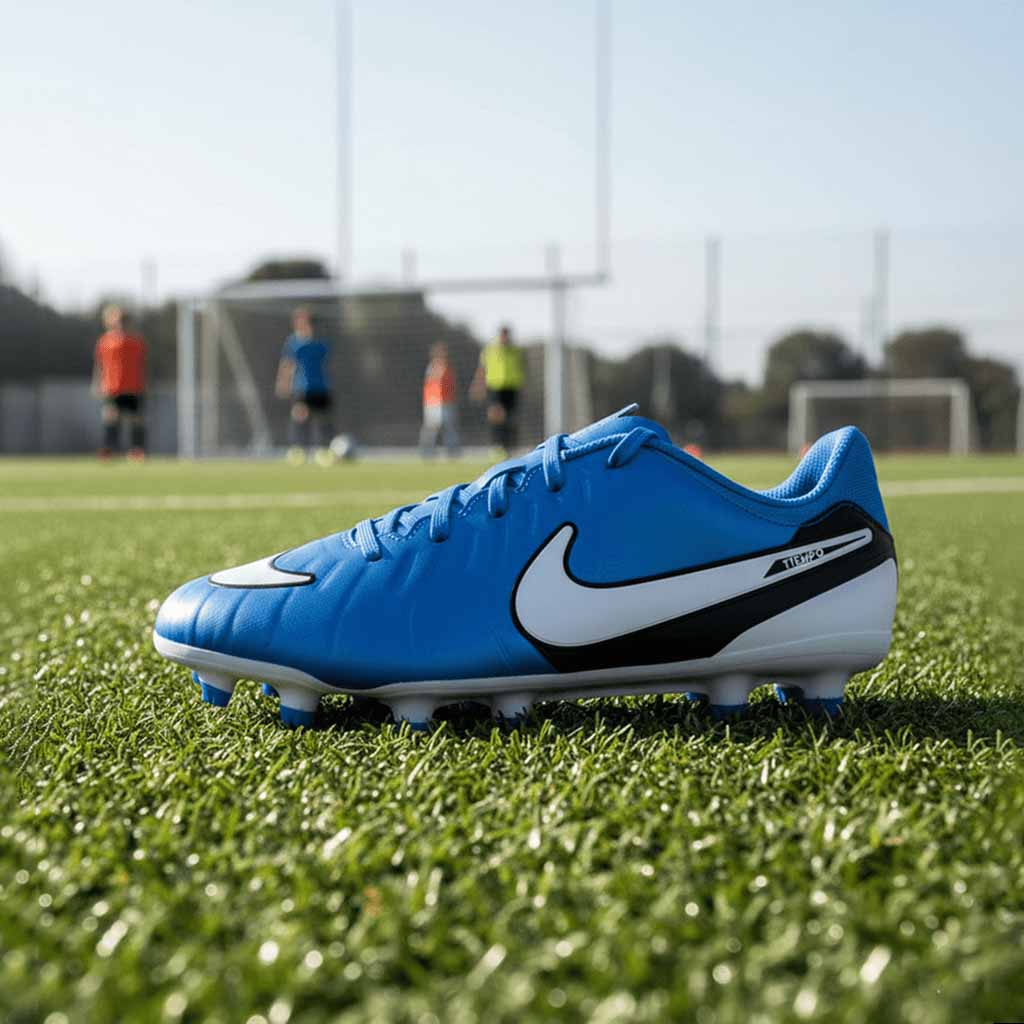
What to Look for in Football Boots for Orthotics?
First and foremost, the factory sockliner must be easily removable to make room for the custom orthotic.
Second, the boot needs adequate internal volume in the midfoot and toe box to prevent the orthotic from pushing the foot too high, which causes heel slippage and painful pressure against the upper.
Finally, a stable, broad base is necessary to ensure the orthotic sits flat and delivers its full corrective support during play.
In the table below, each boot is rated based on removable sockliners, internal volume, and midfoot stability — the three most important factors for modifying junior cleats and ensuring proactive foot care on the pitch.
Recommended Junior Footwear for Orthotics (Ireland 2026)
Note: Prices and availability are subject to change. Please check the retailer's website for the most current information.
Orthotics fit checklist: At-Home Testing Protocol for Online Orders
When you shop for new junior gear via online shops, finding the perfect match requires a structured inspection once the package arrives.Before you remove the retail tags or let your child play outside, follow this step-by-step home evaluation on a clean carpeted surface to ensure full compatibility with their corrective gear, especially if managing pediatric heel conditions like Sever disease.
If the product fails any of these steps, you can safely utilize the online merchant's standard money back guarantee system for a hassle-free return.
- The Mandatory Stock Insole Removal Test
Never slide a corrective insert directly on top of the existing factory footbed.
Once you unbox the boots, completely lift out the manufacturer's stock liner.
Sliding custom devices or over-the-counter support insoles on top of a factory liner ruins the internal volume, forces the foot upward, and causes severe heel slippage.
The underlying layout must allow your child's specific arch support insole to lie perfectly flat against the soleplate with absolutely no rocking or bunching.
- Deep Heel Counter & Foot Ankle Seating
Have your child slide their foot into the boot with their specialized match-day socks on.
Pay close attention to how the rear foot sits within the heel counter.
The heel must slide fully down and back into the deepest part of the boot.
If your child has a high arch profile or you are utilizing rigid orthopedic deep-seated cups, verifying vertical depth is essential to eliminate localized chronic pain heel triggers and manage a severe case of heel pain severe discomfort.
A secure lockdown around the foot ankle complex is vital to isolate movement, prevent friction blisters, and protect the plantar fascia tissue.
- The Ball Foot & Toe Box Flex Test
Ask your child to stand up straight, putting their full weight on both feet, and press your thumb down on the front of the upper.
There should be a precise thumb's width of space at the toes.
More importantly, check the width across the widest area where the toes bend so you do not trigger intense pain ball foot hotspots.
Proper space allows for natural flex and toe splay, which is a major requirement for overall pain relief when fitting protective insoles for flat feet athletes require.
- Indoor Try-On & Flex Balance Evaluation
Let your child jog, skip, and perform gentle lateral movements on a clean indoor carpet for at least two to three minutes.
If they are used to the plush cushioning of standard running shoes, this indoor test will highlight how a football boot reacts to impact force.
If you are not using tailored clinical devices, now is the time to evaluate low-profile options like CURREX CleatPro or Superfeet soccer insoles trimmed to fit the exact silhouette.
Analyze how the underfoot platform reacts to impact.
A balanced, supportive plate is crucial to dampen ground forces and prevent secondary youth sports issues like painful lower back pain, acute pain knee pain, or severe shin splints.
Surface / stud guide
Which outsole feels best with orthotics?
- AG (Artificial Grass) — many short, rounded studs that spread pressure on 3G/4G; more comfortable than long FG on turf.
- FG (Firm Ground) — for Irish grass (dry to moderately soft). Good comfort when the ground has some give; can feel “pokey” on hard turf.
- SG (Soft Ground/metal) — only for very soft/muddy pitches; too aggressive (and uncomfortable) on firm or artificial surfaces.
- TF (Turf) — dozens of rubber nubs; trainer-like feel similar to running footwear on old Astro or hard courts; great to help with immediate pressure relief.
FAQ
Can kids wear orthotics in football shoes?
Children can absolutely wear orthotic insoles inside junior cleats to manage discomfort from severe podiatry conditions.
If your junior athlete is specifically dealing with severe heel strain or a damaged plantar fascia, it is highly recommended to view our specialized diagnostic guide on the top models for plantar fascia recovery.
When dealing with chronic heel pain, it is vital to order a shoe with a completely removable sockliner.
This structural feature ensures that custom orthotics or full-length support insoles can sit perfectly flat against the soleplate,providing essential arch support and targeting localized foot pain without reducing the internal volume needed to keep the foot ankle complex securely locked down.
Should I size up to fit an orthotic?
Sometimes ordering a half size larger from an online shop can help accommodate a bulky clinical device, but it should never be your primary solution.
For children dealing with flat feet or abnormally high arches, prioritizing the actual depth and internal volume of the shoe is far more critical than simply increasing the overall length.
If your child requires corrected alignment for fallen arches, make sure to view our specialized diagnostic guide focusing on the top youth footwear models for flat feet.
Sizing up too much just to clear space makes the boot too long, causing the foot to slide and leading to dangerous heel slippage.
This lack of structural support fails to stabilize the foot ankle complex, which will ultimately worsen acute arch pain durin acceleration.
Are AG studs better than FG for comfort on artificial turf?
Specialized Artificial Ground (AG) studs are significantly better than Firm Ground (FG) models for ensuring effective pain relief on artificial grass.
When purchasing new gear, opt for AG soleplates because they feature shorter, more numerous rounded studs.
Unlike aggressive FG configurations that cause dangerous "over-grip" and jar the joints during pivots, the AG layout distributes weight evenly.
This mechanical setup maximizes shock absorption across the footbed, reducing strain on the plantar fascia and preventing secondary youth sports injuries like painful shin splints or severe knee pain.
Do we need custom orthotics or are sports insoles enough?
When prioritizing long-term foot health, the choice between investing in tailored clinical devices from a podiatry clinic, over-the-counter sports inserts, or a basic gel heel pad depends entirely on the severity of your child's conditions.
For mild arch fatigue, high-quality sports insoles ordered online can provide adequate help and shock absorption.
However, if your child is battling a severe case of fasciitis heel inflammation or structural complications like heel spurs, standard inserts are rarely enough.
Managing stubborn heel spurs or acute plantar fascia tears requires deep orthopedic heel cups or clinician-prescribed custom orthotics to correctly realign the stride and prevent lower back pain.
How do we trim/fit an insole into tight kids’ cleats?
To properly trim and fit an orthopedic insert without worsening acute arch pain, start by removing the factory lining completely from the shoe.
Place the original manufacturer's footbed directly on top of your newfull-length device or gel heel insert, using it as an exact tracing template.
Trace the outline with a pen and trim carefully along the outer edges using sharp scissors.
Once trimmed, slide the device inside, ensuring it lies perfectly flat against the soleplate to deliver optimal pain relief.
Finally, have your child test the footwear to ensure their foot ankle joint sits fully down and back.
This protective pediatric foot care routine shields the plantar fascia from friction and alleviates the pressure points that aggravate chronic heel spurs.

.jpg)

.jpg)
.jpg)