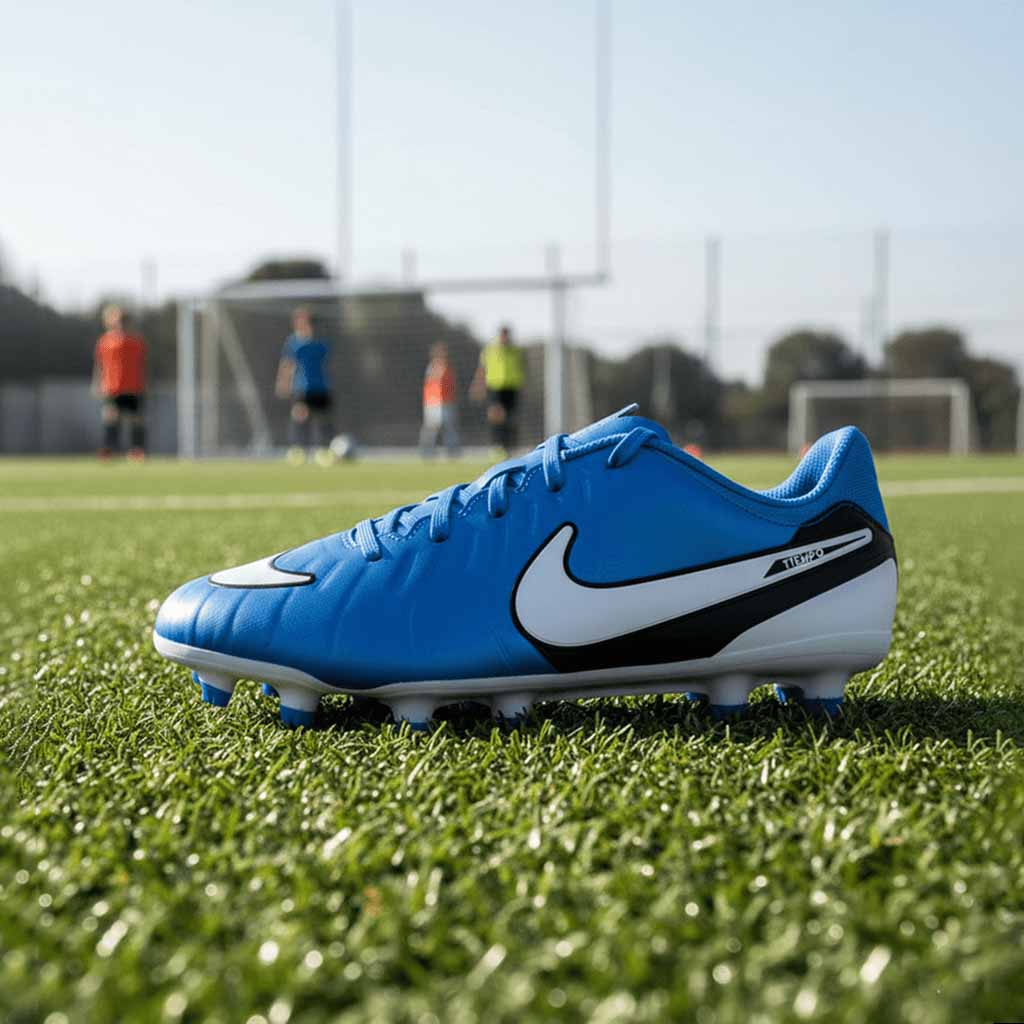
What to Look for in Football Boots for Flat Feet?
The first. The "Last" is the mold that the shoe is built around.
It defines the overall curve of the boot.
Flat-Foot Friendly Needs a "Straighter Last".
Imagine looking at the sole of the boot; it should look relatively straight from heel to toe, providing a wider, more stable platform for the arch to rest on without hanging off the edge.
A boot with a bit of foam or a specialized insert in this layer acts as that missing shock absorber, protecting knees and heels from impact on hard Irish pitches.
Second. Midsole (The "Cushion")
The midsole is the layer of material between the inner sole (where the foot sits) and the outer sole (the studs).
Flat-Foot Friendly: Needs a cushioned midsole.
The Last.Volume
Volume (The "Height") isn't just width (side-to-side); it is the height or "vertical space" inside the boot.
Flat feet often "pancake" and spread out, requiring more vertical space.
A boot with higher volume (or adjustable laces) allows the foot to sit comfortably without the top of the boot pressing down painfully on the instep.
In the table below, each boot is rated based on last shape, midsole support, and volume — the three most important factors for kids with flat feet.
Top 5 Football Boots for Kids with Flat Feet (Ireland 2026)
Note: Prices and availability are subject to change. Please check the retailer's website for the most current information.
How to use this table
Opt for boots with flexible soleplates, padded heel counters, and roomier midfoot areas—these minimize pressure and provide comfort for flat feet.
Leather uppers or adaptive synthetics (like FusionFit) help the boot conform better. FG is the go-to for grass pitches in Ireland, while SG or AG may be needed depending on the surface.
Surface Guide
Stud Patterns by Surface
- TF (Turf): Rubber nubs for Astro or hard courts—mainly for casual or school games.
FAQs
Do kids with flat feet need special boots?
Children with fallen arches benefit significantly from specialized models that feature flexible soleplates, structured heel counters, and roomier midfoot shapes.
These specific design elements prevent the foot from sliding laterally inside the shoe, reduce excessive strain on the arch, and improve overall alignment during sharp cuts and heavy running.
What stud pattern is best for flat feet?
For standard natural grass in Ireland, Firm Ground (FG) boots with conical studs offer the smoothest rotational movement and steady release.
However, because flat-footed players require maximum stability to keep their balance, switching to Soft Ground (SG) metal studs is essential for wet winter mud, while dedicated Artificial Ground (AG) layouts are necessary to distribute pressure evenly across hard 3G/4G turf.
Are leather or synthetic boots better for flat feet?
Both, leather and synthetic materials, offer great structural advantages depending on the foot shape.
Premium natural leather is highly recommended because it stretches and molds perfectly to a wider footprint over time.
On the other hand, modern synthetic uppers featuring adaptive compression bands (like Puma's FusionFit) provide excellent structural flexibility and reliable lockdown without squeezing the foot.
How to size properly for flat feet?
When measuring, always ensure a secure heel fit with roughly a thumb’s width of space left at the toe to accommodate natural growth.
Because a flat foot naturally "pancakes" and expands sideways under weight, parents should prioritize wider-last models with higher footwear volume to prevent painful pressure and cramping across the instep.
Can flat feet lead to other injuries, and can you use orthotics in football boots?
Untreated flat feet can cause the foot to roll inward excessively (overpronation), which frequently leads to severe heel pain and conditions like plantar fasciitis.
To prevent this, using low-profile football boots for orthotics allows you to swap out the stock insoles for custom medical inserts, which is the most effective way to protect the arch and alleviate stress highlighted in our guide on football boots for plantar fasciitis.


.jpg)
.jpg)