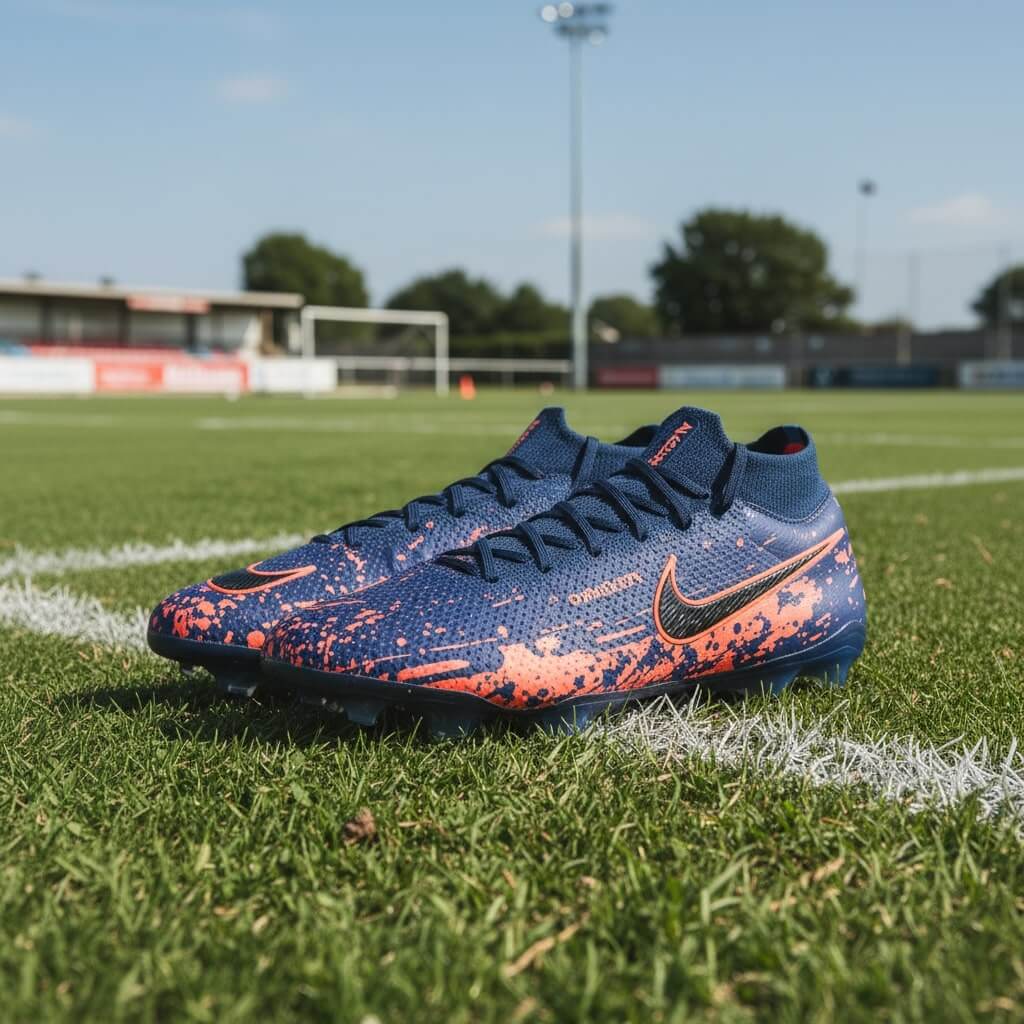
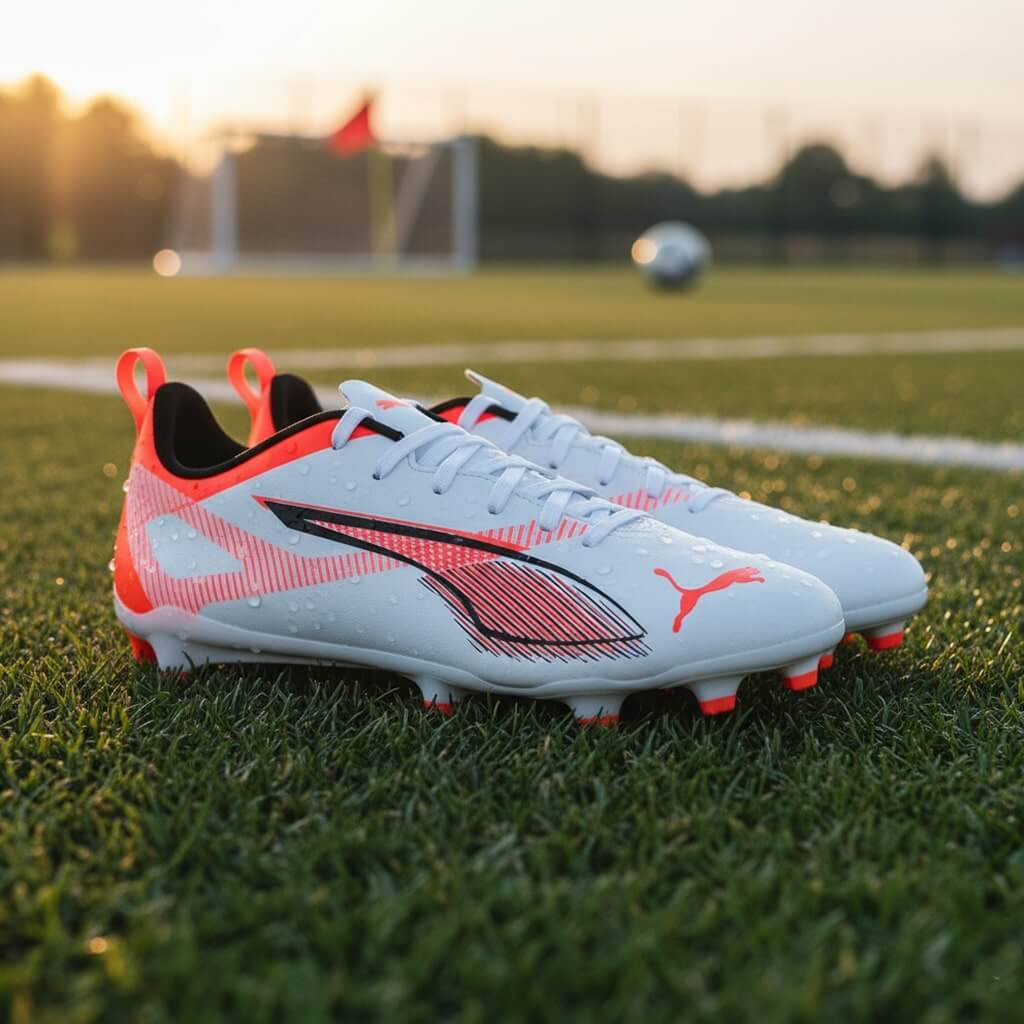
The list of La Liga Pichichi winners from 1929, with quick records, plus the list of most iconic speed boots ever made.
TABLE OF CONTENT
In Spain, the "La Liga Golden Boot" is commonly used to describe the Pichichi Trophy - an award given by Spanish newspaper MARCA to the league’s top score reach season.
Below is a season‑by‑season list from the Messi–Ronaldo era onward, including club and goal tally.
A couple of quick clarifications fans often ask about:
Pichichi vs. LaLiga’s official top‑scorer: they almost always align, but MARCA does its own count for the Pichichi Trophy. In rare cases the tally can differ by one goal from the league’s official record.
European Golden Shoe: a separate award for the top scorer across Europe (points‑weighted by league strength).
A LaLiga Pichichi winner may also win the European Golden Shoe the same season.
Pichichi winners and their boots
Season
Winner (Club)
Goals
Primary boot line used
2025‑26
Kylian Mbappé (Real Madrid)
25
Nike Mercurial Superfly 10 (custom KM / Mercurial 11 Sample)
Jorge da Silva (Valladolid) / Juanito (Real Madrid)
17
Leather boots (early 1980s)
1982‑83
Poli Rincón (Real Betis)
20
Leather boots (early 1980s)
1981‑82
Quini (Barcelona)
26
adidas Copa Mundial
1980‑81
Quini (Barcelona)
20
adidas Copa Mundial
1979‑80
Quini (Sporting Gijón)
24
adidas Copa Mundial
1978‑79
Hans Krankl (Barcelona)
29
adidas leather boots (late 1970s)
1977‑78
Mario Kempes (Valencia)
28
adidas leather boots (1970s)
1976‑77
Mario Kempes (Valencia)
24
adidas leather boots (1970s)
1975‑76
Quini (Sporting Gijón)
18
adidas leather boots (1970s)
1974‑75
Carlos (Athletic Bilbao)
19
Leather boots (1970s)
1973‑74
Quini (Sporting Gijón)
20
Leather boots (1970s)
1972‑73
Marianín (Oviedo)
19
Leather boots (early 70s)
1971‑72
Enrique Porta (Granada)
20
Leather boots (early 1970s)
1970‑71
José Eulogio Gárate (Atlético Madrid) / Carles Rexach (Barcelona)
17
Leather boots (early 1970s)
1969‑70
Amancio (Real Madrid) / Luis Aragonés (Atlético Madrid) / José Eulogio Gárate (Atlético Madrid)
16
Leather boots (late 1960s)
1968‑69
Amancio (Real Madrid) / José Eulogio Gárate (Atlético Madrid)
14
Leather boots (late 1960s)
1967‑68
José Eulogio Gárate (Atlético Madrid)
22
Leather boots (late 1960s)
1966‑67
Waldo (Valencia)
24
Leather boots (1960s)
1965‑66
Vavá (Elche)
19
Leather boots (1960s)
1964‑65
Cayetano Ré (Barcelona)
25
Leather boots (mid-1960s)
1963‑64
Ferenc Puskás (Real Madrid)
20
adidas leather boots (1960s)
1962‑63
Ferenc Puskás (Real Madrid)
26
adidas leather boots (1960s)
1961‑62
Juan Seminario (Zaragoza)
25
Leather boots (early 1960s)
1960‑61
Ferenc Puskás (Real Madrid)
27
adidas leather boots (1960s)
1959‑60
Ferenc Puskás (Real Madrid)
26
adidas leather boots (1960s)
1958‑59
Alfredo Di Stéfano (Real Madrid)
23
Leather boots (late 1950s)
1957‑58
Alfredo Di Stéfano / Ricardo / Manuel Badenes
19
Leather boots (1950s)
1956‑57
Alfredo Di Stéfano (Real Madrid)
31
Leather boots (1950s)
1955‑56
Alfredo Di Stéfano (Real Madrid)
24
Leather boots (1950s)
1954‑55
Juan Arza (Sevilla)
28
Leather boots (1950s)
1953‑54
Alfredo Di Stéfano (Real Madrid)
27
Leather boots (1950s)
1952‑53
Telmo Zarra (Athletic Bilbao)
24
Heavy leather boots with nailed studs
1951‑52
Pahiño (Real Madrid)
28
Heavy leather boots with nailed studs
1950‑51
Telmo Zarra (Athletic Bilbao)
38
Heavy leather boots with nailed studs
1949‑50
Telmo Zarra (Athletic Bilbao)
25
Heavy leather boots with nailed studs
1948‑49
César Rodríguez (Barcelona)
28
Heavy leather boots with nailed studs
1947‑48
Pahiño (Celta Vigo)
23
Heavy leather boots with nailed studs
1946‑47
Telmo Zarra (Athletic Bilbao)
34
Heavy leather boots with nailed studs
1945‑46
Telmo Zarra (Athletic Bilbao)
24
Heavy leather boots with nailed studs
1944‑45
Telmo Zarra (Athletic Bilbao)
19
Heavy leather boots with nailed studs
1943‑44
Edmundo Suárez “Mundo” (Valencia)
27
Heavy leather boots with nailed studs
1942‑43
Mariano Martín (Barcelona)
32
Heavy leather boots with nailed studs
1941‑42
Edmundo Suárez “Mundo” (Valencia)
27
Heavy leather boots with nailed studs
1940‑41
Edmundo Suárez “Mundo” (Valencia)
30
Heavy leather boots with nailed studs
1939‑40
José Luis Panizo (Athletic Bilbao)
20
Heavy leather boots with nailed studs
1935‑36
Isidro Lángara (Oviedo)
27
Leather football boots (1930s)
1934‑35
Isidro Lángara (Oviedo)
26
Leather football boots (1930s)
1933‑34
Isidro Lángara (Oviedo)
27
Leather football boots (1930s)
1932‑33
Manuel Olivares (Real Madrid)
16
Leather football boots (1930s)
1931‑32
Guillermo Gorostiza (Athletic Bilbao)
12
Leather football boots (1930s)
1930‑31
Bata (Athletic Bilbao)
27
Leather football boots (1930s)
1929‑30
Guillermo Gorostiza (Athletic Bilbao)
19
Leather football boots (early era)
1928‑29
Paco Bienzobas (Real Sociedad)
14
Early leather football boots (pre-WWII)
Note: Players often switch between packs/plates during a season.
The entries reflect the primary boot line worn for most league matches.
In Spain, the "La Liga Golden Boot" is commonly used to describe the Pichichi Trophy - an award given by Spanish newspaper MARCA to the league’s top score reach season.
Below is a season‑by‑season list from the Messi–Ronaldo era onward, including club and goal tally.
A couple of quick clarifications fans often ask about:
Pichichi vs. LaLiga’s official top‑scorer: they almost always align, but MARCA does its own count for the Pichichi Trophy. In rare cases the tally can differ by one goal from the league’s official record.
European Golden Shoe: a separate award for the top scorer across Europe (points‑weighted by league strength).
A LaLiga Pichichi winner may also win the European Golden Shoe the same season.
Recent context:
Lionel Messi holds the record for most Pichichis (8).
Multiple-Time Winners
Player
Position
Nationality
Titles
Lionel Messi
Right Winger
Argentina / Spain
8
Telmo Zarra
Centre-Forward
Spain
6
Hugo Sánchez
Centre-Forward
Mexico
5
Cristiano Ronaldo
Centre-Forward
Portugal
3
Karim Benzema
Centre-Forward
France / Algeria
1
Robert Lewandowski
Centre-Forward
Poland
1
Kylian Mbappé
Centre-Forward
France / Cameroon
1
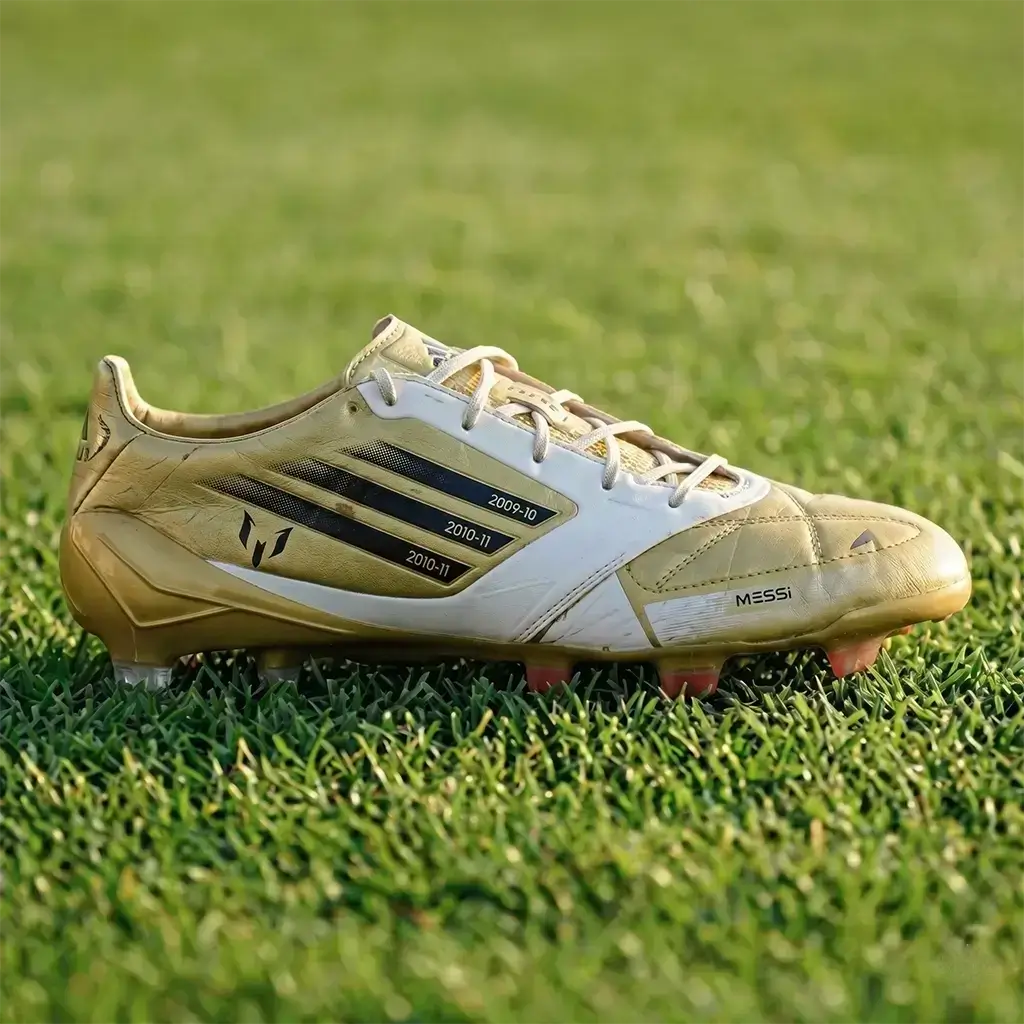
Adidas F50 adizero (Messi 2011–12)
The season that changed football history
The 2011–12 La Liga season wasn’t just Lionel Messi at his best — it was Messi redefining what was possible. Fifty league goals. Seventy-three in all competitions.
Records that still stand more than a decade later.
On his feet throughout that historic campaign was the adidas F50 adizero miCoach, a boot built with one obsession in mind: pure speed.
At a time when most football boots were still padded and bulky, the F50 adizero felt almost shocking. Ultra-thin. Feather-light. Unforgiving. Exactly the kind of boot that rewarded perfect touch, balance, and timing — everything Messi mastered that season.
Performance: why the F50 adizero suited Messi perfectly
The F50 adizero Messi wore in 2011–12 weighed around 165 grams, making it one of the lightest football boots ever used at the elite level.
That mattered.
Messi’s game that season was built on:
explosive first steps
rapid changes of direction
tight touches at full speed
finishing without breaking stride
The SprintSkin synthetic upper offered a barefoot-like feel, allowing Messi to manipulate the ball with minimal interference.
There was no cushioning to hide poor technique — only clean contact and instant feedback.
Underfoot, the SprintFrame soleplate delivered aggressive traction without stiffness. It allowed Messi to accelerate sharply on dry Camp Nou grass while staying stable through his signature low-center-of-gravity turns.
Even the fit played a role. The adizero was famously narrow and unforgiving, locking the foot in place. For Messi, that meant zero wasted movement — every step translated directly into action.
Why this boot worked for goals, not just speed
It’s easy to assume the F50 adizero was only about pace. Messi’s 50-goal season proved otherwise.
Despite its minimal design, the boot offered:
a clean strike zone for low, accurate finishes
consistent contact for placed shots
excellent stability when opening the body to curl the ball
Many of Messi’s goals that season came from tight angles and quick releases — situations where a heavier, padded boot might slow the action. The adizero stayed out of the way, letting instinct take over.
Legacy: the boot that defined the modern speed era
The 2011–12 F50 adizero is now considered one of the most iconic football boots of all time — not because of marketing, but because of what happened on the pitch.
It helped:
establish the ultra-light “speed boot” category
influence the design of today’s adidas X and Nike Mercurial lines
prove that minimal boots could still deliver control and precision
Although the F50 line has since been discontinued, its DNA lives on. Every lightweight attacker’s boot today traces part of its design philosophy back to this era of Messi and the adizero.
What parents should know today
As legendary as the F50 adizero was, it’s important to be clear: this boot would be too extreme for most kids.
It was:
very narrow
very thin
unforgiving on joints
designed for elite adult athletes
That’s why modern junior boots inspired by the F50 focus on lighter materials with more comfort and durability, rather than copying it exactly.
Messi’s greatest La Liga season wasn’t just about talent — it was about having a boot that disappeared under his feet. The F50 adizero did exactly that.
Kids’ Modern Equivalents of the adidas F50 adizero (Messi 2011–12)
Messi’s adidas F50 adizero was all about speed, low weight, and razor-sharp touch.
While the original F50 line is no longer produced, today’s kids’ boots that best replicate that feel focus on lightweight uppers, responsive soleplates, and a close-to-the-foot fit.
Below are the closest modern equivalents for junior players who want that classic F50 adizero sensation.
Very light, aggressive speed boot — the closest non-adidas alternative to the classic F50 concept.
FG / AG
€40–€85
PUMA.com, Sports Direct, Lovell Soccer
Nike Mercurial Vapor X CR7 “Gala” (2014–15)
When Cristiano Ronaldo scored 48 La Liga goals in the 2014–15 season, he did it wearing one of the most iconic speed boots ever made: the Nike Mercurial Vapor X CR7 “Gala” (low-cut).
The season didn’t end with a league title for Real Madrid, but individually it was one of the most ruthless scoring campaigns in Spanish football history — and the Vapor X “Gala” became inseparable from that record-breaking run.
Performance: Built for Explosive Finishing
The Mercurial Vapor X marked a turning point in speed boots. It was the first Vapor built entirely around Nike’s new synthetic Teijin upper, replacing the older microfiber feel with a thinner, more responsive shell.
On the pitch, that meant:
Instant touch at full sprint — crucial for Ronaldo’s diagonal runs and one-touch finishes
Minimal stretch, keeping the forefoot locked during powerful strikes
A natural, low-cut feel that allowed full ankle freedom for shooting mechanics
The compressed nylon soleplate delivered aggressive toe-off without feeling unstable, helping Ronaldo explode into the box and finish with either foot. Unlike heavier power boots of the era, the Vapor X stayed brutally simple: speed in, shot out.
This was a boot designed for players who arrive early, hit fast, and leave defenders behind.
The “Gala” Design: Speed Meets Status
The “Gala” colourway — metallic gold with black detailing — wasn’t subtle by design.
It celebrated Ronaldo’s Ballon d’Or success and positioned the Mercurial not just as a performance boot, but as a statement of dominance. Every sprint, every finish, every celebration reinforced the message: this was the boot of the league’s most unstoppable forward.
Unlike later CR7 editions that leaned heavily into storytelling graphics, the Gala Vapor X stayed clean and sharp — matching Ronaldo’s direct, ruthless playing style that season.
Legacy: The Blueprint for Modern Speed Boots
The Mercurial Vapor X CR7 “Gala” now sits at a crossroads in boot history.
It closed the chapter on traditional ultra-thin speed boots and laid the foundation for:
Today’s Mercurial Vapor & Superfly lines
Lightweight synthetics over leather hybrids
Speed boots built around scoring zones, not just running
Ronaldo’s 48-goal season proved something important: speed boots weren’t just for wingers anymore. In the right hands (and feet), they became the most lethal striker’s weapon in football.
For young players today, the Vapor X “Gala” represents more than nostalgia — it represents the moment when speed, finishing, and branding fully aligned.
Quick facts & records
Most Pichichi wins:Lionel Messi (8) — an all‑time LaLiga record. Wikipedia
About the counting: The Pichichi Trophy is a MARCA award and uses MARCA’s own match counts. On rare occasions (e.g., 2010/11), you’ll see a one‑goal discrepancy with LaLiga’s official tally; Pichichi is still awarded to the top goalscorer that season.
Kids’ Modern Equivalents of the Mercurial Vapor X “Gala” (Ireland)
Extremely light and aggressive speed boot — the best non-Nike option for kids who prioritise pace and quick movement.
FG / AG
€40–€85
PUMA.com, Sports Direct, Lovell Soccer
FG vs MG for Ireland:
If your child only plays weekend matches on natural grass, FG boots are fine.
However, most kids in Ireland train on 3G/4G during the week and play on grass at weekends.
In that case, MG (Multi-Ground) boots are the safest one-pair solution — they reduce stud pressure on artificial turf while still performing well on grass.</p>
FAQ
What is the difference between the La Liga Golden Boot and the Pichichi? They refer to the same top‑scorer concept in Spain. The Pichichi Trophy is awarded by MARCA. Most seasons the Pichichi winner is identical to LaLiga’s official top scorer.
Can there be shared winners? Yes. If two (or more) players finish on the same goal tally, Pichichi is shared for that season.
Does the Pichichi consider assists or minutes? No—only goals scored in LaLiga.
Can a Pichichi winner also win the European Golden Shoe? Absolutely. It happens often when LaLiga’s top scorer also leads Europe’s points‑weighted ranking.
Who has the most Pichichi awards? Lionel Messi (8), followed by Telmo Zarra (6). Wikipedia

.jpg)


%20MG.jpg)